Are the plants in question actually giant hogweed?
Check the Connecticut Invasive Plant Working Group website for photos and descriptions of giant hogweed and plants often mistaken for hogweed. If you are confident that giant hogweed is present, please follow these guidelines:
1. Contact the CT Invasive Plant Working Group to report the location of the giant hogweed plants. We prefer that a member of the working group visit the site to record information about the infestation. We can advise you about how best to deal with hogweed.
2. Avoid skin and eye contact with the sap of giant Wear waterproof gloves, long sleeves and eye protection (glasses or goggles) if you plan to cut down or handle the plants.
3. DO NOT use a “weed-whacker” or brush-cutter blade to cut giant hogweed because the sap could be splattered on you as stems are cut.
4. A long, sharp serrated knife is the best tool for cutting hogweed stalks or DO NOT reach up to cut plants that are taller than you as sap may spray onto your face or into your eyes! Instead, cut plants at or near ground level first before cutting up the remainder.
5. Have several large plastic trash bags ready in preparation for disposing of hogweed flowers and Clear trash bags are best if you plan to “solarize” the contents (explained below), but dark bags are suitable as well. Double or triple-bag the plant parts to prevent ripping of bags by cut stems.
6. Carefully cut off all inflorescences (flower heads) and place them in trash If seeds have formed, be especially careful to avoid shedding seeds onto ground during the cutting and bagging process. It is best to do this prior to seed formation, because more mature seeds tend to shed easily. If seeds are shedding, contain them within as small an area as possible.
7. Seal trash bags, if possible, place bags in a secure location where they will be exposed to direct sunlight to give flowers and seeds a heat treatment (solarization) for 1 week or more. This should help destroy seed viability. Then dispose of trash bags in the garbage.
8. You will also need to prevent giant hogweed plants from flowering again and to eliminate hogweed seedlings from developing This can be accomplished by carefully digging out the roots and allowing plants to thoroughly dry before disposal. However, digging up well-established hogweed plants or numerous seedlings is not an easy process.
9. If you only have a few plants in a small area, cut them down to ground level and cover the soil with black plastic. This will keep the plants from regrowing and prevent new giant hogweed seedlings from Keep an eye on the site next year to make sure that seedlings don’t poke through the black plastic.
10. Another option for destroying the plants is to spray the leaves with a herbicide containing glyphosate as the active ingredient (“Roundup” or similar product). Glyphosate is a systemic herbicide that is absorbed by leaves and will move into the roots to prevent regrowth the following Either apply a ready-to-use spray or dilute a concentrated glyphosate product according to the label directions. Follow all the safety precautions on the label and avoid contacting any desirable plants with the spray. Cover leaf surfaces thoroughly with spray droplets, but do not spray to the point at which liquid is dripping off the leaves. The best time to apply glyphosate is during the summer months when hogweed leaves are green and actively growing. Be patient: glyphosate is a slow-acting herbicide, so it may take up to 1 week before symptoms begin to appear as the plant eventually dies. Do not cut or dig up the plant until the top growth has died back. If the leaves remain green 2 weeks after initial treatment, spray them with glyphosate again.
11. Check the site and surrounding areas for the next several years for emergence of any hogweed seedlings or regrowth from previous year’s Reports suggest that giant hogweed seeds can remain viable in the soil for 7 years, so long-term monitoring is important.
The information provided is for educational purposes. The pesticide user is responsible for reading and following label directions. The label is the law. The user of this information assumes all risks for personal injury and property damage. Any references to commercial products, trade or brand names are for informational purposes only. No endorsement or approval of commercially available products in intended.
More information
Giant Hogweed – National Invasive Species Information Center
Giant Hogweed Fact Sheet from New York Invasive Species Information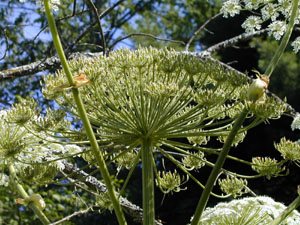
Giant Hogweed Fact Sheet from the Massachusetts Introduced Pests Outreach Project
Giant Hogweed Look-a-Likes from the State of Maine
New York Department of Environmental Conservation – Giant Hogweed
Giant Hogweed Information from the Washington State Noxious Weed Control Board