Agenda
8 am
Check-in opens (Visit Plant Samples and Posters in Room 304C)
9 am
WELCOME: CIPWG Co-Chairs
DEAN REMARKS: Dr. Kumar Venkitanarayanan, Ph.D., Dean, UConn CAHNR
9:30
KEYNOTE SPEAKER: Tom Zetterstrom, Sharon Land Trust: Land Trust Decision Model for Invasive Control in Severely Impacted Areas of Forest Collapse
10:30
Break (Visit Plant Samples in Room 304C)
10:45
MORNING SESSION: Myths of Invasive Plant Management: A Panel Discussion
Panel: Dr. Todd Mervosh, TM Agricultural & Ecological Services; Jess Toro, Native Habitat Restoration; Lukas Palmieri, All Habitat Services; Frank Belknap, Manchester Land Conservation Trust. Moderator: Emmett Varricchio, CIPWG Co-chair
11:45
Lunch (Visit Plant Samples in Room 304C)
1:00
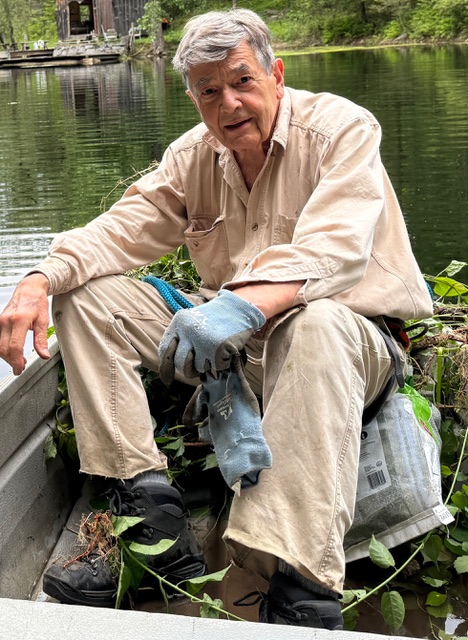
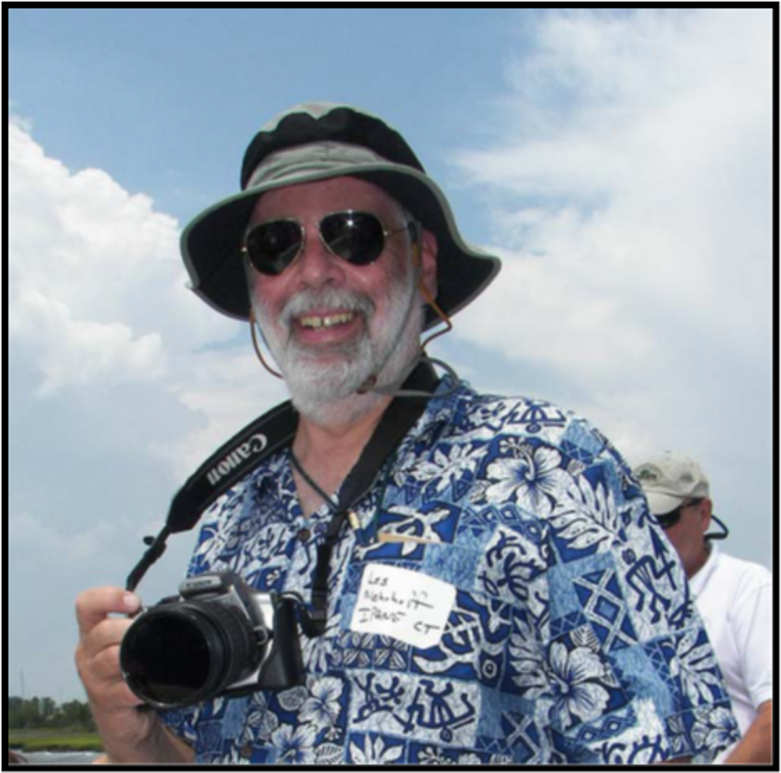
LESLIE J. MEHRHOFF AWARD
1:15
Barberry Research Update, Dr. Bryan Connolly, ECSU
1:35
Transition to Breakouts
1:45
GROUP A SESSIONS: Breakout Sessions 1, 2, 3
1. Identification and Management of Invasive Vines: Speakers: Dr. Bryan Connolly, ECSU; Pete Picone, CT DEEP. Moderator: Alyssa Siegel-Miles, UConn Extension
2. Rugged Native Plants for Restoration of Managed Areas: Speaker: Frederick (Erik) C. Sechler, Jr., Native Plant Trust. Moderator: Dr. Lauren Kurtz, UConn
3. Invasive Aquatics: Updates on Hydrilla and Water Chestnut: Speakers: John Hall, Jonah Center for Earth and Art; Greg Bugbee, CAES. Moderator: Joshua Tracy, Regional Water Authority
3:00
Break (Visit Plant Samples in Room 304C)
3:15
GROUP B SESSIONS: Breakout Sessions 4, 5, 6
4. Special Topics in Invasive Plant Management: Speakers: Christian Allyn, Invasive Plant Solutions; Joshua Tracy, Regional Water Authority; Tim Mack, Hamden Land Conservation Trust. Moderator: Dr. Todd Mervosh, TM Agricultural & Ecological Services
5. Building Layers for Biodiversity with Native Plants: Speakers: Anna Fialkoff and Maggie Redfern, Connecticut College Arboretum. Moderator: Peter Picone, CT DEEP
6. Herbicide Management of Invasives: Law and How to Apply it: Speaker: Zach Donais, CT DEEP. Moderator: Vickie Wallace, UConn
4:30
Transition to Closing Remarks
4:40
CLOSING REMARKS: Joshua Tracy, Regional Water Authority
5:00 - End
Pesticide recertification credits:
PA, 1A (0.5 credits); 3D (1 credit); 5 (1.5 credits); 2, 3A, 6 (4 credits); All Categories (1 credit)
Max Credits: 5
SPEAKER BIOS
Keynote: Land Trust Decision Model for Invasive Control in Severely Impacted Areas of Forest Collapse
Tom Zetterstrom, Sharon Land Trust
Bio: Tom Zetterstrom is a prominent Northwest Connecticut naturalist, photographer, and invasive management advocate recognized for organizing the volunteer Knotweed Control Initiative for the Housatonic River Commission of the Wild and Scenic Housatonic, with the support of the Housatonic Valley Association, and earning him the 2024 Leslie J Mehrhoff Award for his visionary leadership.
Talk Description:
Tom Zetterstrom describes a 4-year intervention at Sharon Land Trust’s Hamlin Preserve to reverse extensive forest collapse caused by Oriental bittersweet at its full biological potential that had killed 160 mature red cedar trees. The talk describes primary woody invasives (bittersweet) and other invasive threats (common buckthorn, privet, multiflora rose) in order of impact. Then it examines pre-existing and potential invasion from opportunistic herbaceous invasive plant (garlic mustard, Canada thistle and mugwort). The talk considers these in order from upper story to middle level to ground level and pays particular attention to allelopathic buckthorn and garlic mustard.
- Zetterstrom describes IPM decision making tools and processes including annual life cycle points of intervention (UMN graphics), as well as optimum treatment calendars (UConn, UMN and others) which guide timing and type of treatment. Between 2022 and 2025 Sharon Land Trust engaged numerous member volunteers in their control effort using "cut and treat" method and amounting to 560 volunteer and staff hours to control bittersweet. In addition, 4 contractors were subsequently employed using forestry mowers, a forest harvester to salvage and de-limb 160 huge cedar logs, tractors to assemble brush piles, and manage extremely heavy layers of shredded woody debris.
- Throughout, the use of herbicides (glyphosate and triclopyr) was essential but was minimized by chosen techniques (cut and treat and spot spraying).
- Invasive management mapping was used to define various work zones as well as point-location mapping by high school students to define save trees (red cedar and white pine) and bittersweet plant locations. This map serves as a management tool as we approach nearly full eradication of bittersweet and bring that invasion back to "early detection and rapid response” EDRR management levels.
- Aside from defeating bittersweet, the land trust members were motivated by saving trees, one tree at a time, which resulted in the stabilization of a conifer grove of 325 trees that are now sustainable. In addition, during the process we also liberated and preserved rare and notable specimen trees such as a classic American elm (96 feet tall and now injected to prevent DED) and a common apple tree which now has Connecticut Champion Apple status.
Myths of Invasive Plant Management: A Panel Discussion
Lukas Palmieri
Bio: Lukas Palmieri is a Crew Leader at All Habitat Services (allhabitat.com), contributing to ecological management projects. Lukas graduated from the University of Connecticut with a Bachelor of Science in January 2023.
All Habitat Services, LLC is an ecological management firm specializing in aquatic and terrestrial habitat restoration and vegetation management. Drawing from wide-ranging backgrounds and specializations in insect, plant and wildlife biology, All Habitat develops innovative, practical, and integrated management solutions using cultural, mechanical, chemical and natural techniques.
Jess Toro
Frank Belknap
Bio: Frank has worked with the Manchester Land Conservation Trust for a decade as a steward. He has attended an invasive plant management course given at UMass Amherst and completed a DEEP Pesticide Supervisors Course. Frank organizes invasive plant education for the Manchester Land Conservation Trust volunteers and provides guidance for general use herbicide applications. The IPM work includes removal of mugwort, autumn olive, Ailanthus, winged euonymus, Phragmites, Japanese knotweed, and Japanese barberry.
Dr. Todd Mervosh
Bio: Todd Mervosh is general manager of TM Agricultural & Ecological Services in Suffield, CT. An Illinois native, he earned a Ph.D. in agronomy/weed science at the University of Illinois in 1994. For the next 20 years, Todd was a scientist at The Connecticut Agricultural Experiment Station in Windsor. He conducted weed control experiments in several crops and did research on management of invasive plants including oriental bittersweet, Japanese stiltgrass and mile-a-minute weed. In his business since 2015, Todd consults with growers and property managers about effective and ecologically sound vegetation management strategies, including proper use of herbicides.
Barberry Research Update
Dr. Bryan Connolly, ECSU
Talk Description: This talk will examine the long-lasting effects of Japanese barberry removal at Fisher’s Meadows, a town park in Avon, Connecticut along the Farmington river. Japanese barberry has invaded large portions of the floodplain forest out competing the native vegetation. Barberry removal was done in one area of Fisher’s Meadows between 2007-2016.
Bio: Dr. Bryan Connolly, Associate Professor, Biology Department Eastern Connecticut State University (ECSU) is a botanist and horticulturalist. His research interests include rare plants of New England, the nightshade family, the rose family, and Cannabis. Prior to his current position at ECSU, Professor Connolly was a faculty member at Framingham State University in Massachusetts and also worked for the Massachusetts Division of Fisheries and Wildlife.
Breakout Sessions
1. Management of Invasive Vines (Porcelainberry, Bittersweet and others)
Talk Description: This session will provide participants with tangible, practical tools and options on how to manage invasive vines, with a particular focus on porcelainberry and bittersweet. Topics covered will include how to identify these invasive vines, how to distinguish them from look-alikes, and how to manage these vines employing a range of methods from mechanical to chemical.
Dr. Bryan Connolly
Bio: Dr. Bryan Connolly, Associate Professor, Biology Department Eastern Connecticut State University (ECSU) is a botanist and horticulturalist. His research interests include rare plants of New England, the nightshade family, the rose family, and Cannabis. Prior to his current position at ECSU, Professor Connolly was a faculty member at Framingham State University in Massachusetts and also worked for the Massachusetts Division of Fisheries and Wildlife.
Peter Picone
Bio: Peter Picone is a DEEP Wildlife Biologist for the Connecticut Department of Environmental Protection, Wildlife Division, Sessions Woods Wildlife Management Area, Burlington, CT. Mr. Picone provides technical assistance in enhancement of wildlife habitat; specializing in the use of native plants and managing invasive non-natives; oversees/directs management of western district state land wildlife management areas in habitat and wildlife management; provides technical assistance to private and municipal land managers; member of the Connecticut Invasive Plant Working Group steering committee; member of the Board of Directors of Quinnipiac River Watershed Association; member of the CT Envirothon Steering Committee; owner and habitat manager of Charter Oak Tree Farm.
Alyssa Siegel-Miles
Bio: Alyssa Siegel-Miles is a program assistant and research technician in the University of Connecticut's Department of Extension. She supports the Sustainable Landscapes Program. Ms. Siegel-Miles is an alumnus of Northwestern University (B.A. English Literature) and New York Botanical Garden School of Professional Horticulture (Horticulture Diploma). She is currently earning a master's degree through the UConn Master of Environmental Management program.
2. Invasive Aquatics: Updates on Hydrilla and Water Chestnut
John Hall
Talk Description: Managing Water Chestnut Removal Projects
This session will offer some brief points on planning and strategy, volunteer recruitment, hand pulling versus herbicide use, paid field workers, grant funding, government support, and common logistic issues. Most of the time will be spent addressing situations and challenges faced by those in attendance.
Bio: John Hall is the founder and Executive Director of the Jonah Center for Earth and Art in Middletown and Portland, CT. The Jonah Center's programs include removal of invasive water chestnut plants from the Mattabesset River, Floating Meadows, and the Connecticut River from Glastonbury to Middle Haddam. This work began in 2015 and has been funded since 2024 by DEEP's Aquatic Invasive Species grant program. John has offered consultations on a variety of plant removal projects, ranging from small inland ponds to large waterways such as the Connecticut River.
Greg Bugbee
The Connecticut Agricultural Experiment Station, Office of Aquatic Invasive Species
gregory.bugbee@ct.gov
Talk Description: Tracking the Spread of Connecticut River Hydrilla
In 2016, a new strain of hydrilla was found in the Connecticut River with subsequent surveys documenting nearly 1000 acres from southern Massachusetts to Long Island Sound. Known as northern hydrilla, this strain is more robust than monecious hydrilla which was formerly the predominate strain in the northeast. It can rapidly engulf entire coves, marinas, and river systems. It was thought to be limited to the Connecticut River and its tributaries until 2023 when it was detected near a boat launch in East Twin Lake near the New York/Massachusetts border. This was the start of detections in other waterbodies with eleven containing the plant by the end of 2026. We are beginning to get information on routes of entry, rapidity of spread, and habitat preferences. In 2025 and 2026, The Office of Aquatic Invasive Species surveyed all State inland boat launches for northern hydrilla and found only one new infestation. Although the known range of northern hydrilla is currently limited to Massachusetts and Connecticut, the likelihood it has or will move to neighboring states is acute.
Bio: Associate scientist at the Connecticut Agricultural Experiment Station for over 40 years and heads the Office of Aquatic Invasive Species. He has led aquatic plant surveys of nearly 500 Connecticut lakes and ponds and has directed a multitude of projects on invasive aquatic plant control statewide. He has numerous popular and scientific publications and is the recipient of the 2015 Journal of Aquatic Plant Management “Outstanding Paper Award” for his work on curlyleaf pondweed. He has led the surveillance of the Connecticut River which provided the first thorough documentation of the infestation of a genetically distinct strain of hydrilla. Most recently he has led surveillance of all State boat launches for hydrilla and other invasive aquatic plants.
3. Rugged Native Plants for Restoration of Managed Areas
Frederick (Erik) C. Sechler, Jr
Ecologist/Ecological Programs Coordinator
774-519-5555
NativePlantTrust.org
fsechler@nativeplanttrust.org
Talk description: Managing invasive plants requires careful diligence and patience. After an invasive plant management project has been completed to satisfaction, determining if there is a need to repopulate the area with native plants is often a difficult choice. Deciding to repopulate an area with native plants is based on whether native plants are already present in the managed area or vicinity. If it is determined that new sources of native plants are needed in the managed area, it is important to repopulate landscapes with rugged native plants that can compete under tough conditions, expand wildlife habitat, support biodiversity, and build climate resilience. This talk focuses on these rugged plants and which ones are appropriate for specific habitats with variable light and moisture regimes.
Bio: Prior to joining Native Plant Trust, Erik worked with Pennsylvania Natural Heritage Program as an ecological information specialist and county inventory ecologist, and with New York Natural Heritage Program as an ecologist specializing in natural community ecology, avian habitat ecology, and vegetation mapping. He has more than 10 years’ experience working for a Natural Heritage Program and NatureServe as an ecologist and has also worked with Manomet and The Trustees of Reservations on Martha's Vineyard. He holds a master’s degree in Conservation Biology from Antioch New England University, where he studied habitat modeling of Louisiana Waterthrush in southern New Hampshire, and a pre-medicine degree from the University of North Carolina at Chapel Hill. His professional interests include avian, natural community and conservation ecology, rare plant ecology, conservation and management, habitat assessment, and invasive plant ecology and management.
Dr. Lauren Kurtz
Bio: Dr. Lauren Kurtz is the newest member of the Home and Garden Education Center at the University of Connecticut. A proud UConn alum, she received both her Master’s and Doctorate degrees from the Department of Plant Science and Landscape Architecture, where her graduate research focused on the breeding and horticulture of hemp. Today, as a science communicator and educator, Lauren specializes in ecological horticulture and invasive plant management.
4. Special Topics in Invasive Plant Management
Talk description: This session will include three short presentations from professional land managers. Joshua Tracy, the Forester and Drone Manager for the South-Central Connecticut Regional Water Authority, will discuss his experience using a steam weeder to manage stiltgrass. Christian Allyn, owner of Invasive Plant Solutions will discuss how to work with invasive plant contractors including developing a scope of work and duration of management expectations. Tim Mack will discuss managing Tree-of-heaven on Hamden Land Conservation Trust property.
Christian Allyn: How to Work with Invasive Plant Contractors
Bio: Christian Allyn has made a career of managing invasive plants across Connecticut, Massachusetts and New York. His company, Invasive Plant Solutions, has managed invasive plants in state lands, land trusts, and backyards. Mr. Allyn graduated from the University of Connecticut in 2017 with a horticulture and resource economics double major. Mr. Allyn started Invasive Plant Solutions while at UConn and now has a staff of eight conducting management throughout Connecticut, Western Massachusetts and Eastern New York.
Joshua Tracy: Steam Weeding Stiltgrass
Bio: Joshua Tracy earned his B.S. in 2014 from the University of Connecticut on a presidential scholarship in Natural Resources, concentrating in water resources and climate. He is currently a Forester and Drone Manager for the South-Central Connecticut Regional Water Authority, helping manage over 21,000 acres of watershed forestland. From 2014-2017, he worked as a technician in Connecticut’s DEEP wildlife division trapping and carrying out research on the New England cottontails. From 2017-2018 he worked as a technician for the Regional Water Authority alongside the Forester performing timber harvests and GIS/ cartographic related work, and from 2018- 2024 as RWA’s Invasive Species Management Technician.
Tim Mack, Hamden Land Conservation Trust: Managing Tree-of-heaven
Bio:
- Inland Wetlands Commissioner, Town of Hamden 2018-2024
- Stewardship Co-Chair, Board member Hamden Land Conservation Trust 2017-2024
- Trail manager/Sawyer-Connecticut Forest and Parks Association 2017-2024
- Connecticut Master Woodland Manager Program 2021-2022
- Registered Respiratory Therapist, Neonatal-Pediatric Specialist 1976-2020
- MS-Communications/Journalism Quinnipiac University, 2000
- BFA-University of Southern Maine, 1992
5.Building Layers for Biodiversity with Native Plants
Anna Fialkoff
Talk Description: Ideally, a native plant garden should contain all the layers, from the ground up to the canopy, in order to fill every open niche for wildlife habitat and to hold its own against invading weeds. Learn how to group trees, shrubs, and herbaceous plants together for maximum impact and beauty for a variety of situations and growing conditions.
Bio: Anna Fialkoff is the Connecticut College Arboretum's Horticulturist. In her role, she leads student workers, volunteers and staff to steward the Arboretum plant collections and natural areas. Previously as the Ecological Programs Manager at Wild Seed Project in Maine, Anna supervised the creation of the organization's annual guide publication, worked with partner organizations on native demonstration designs and plantings, and taught educational programs. She got her start in ecological horticulture in 2010 as an apprentice at Native Plant Trust's botanical garden in Massachusetts. Anna holds a BA in human ecology from College of the Atlantic and an MS in ecological design from The Conway School. Her mission is to utilize her passion for native plants and her skills in education, horticulture and landscape design to connect people to the natural world and inspire them to start gardening for biodiversity.
Maggie Redfern
Talk Description: When we think about planting trees in garden settings, the focus is often on aesthetics, shade, and increasing property values. While these are important benefits, native trees can do even more for our communities - especially when selected strategically. By planting trees that support pollinators, we can help rebuild essential ecosystems, improve biodiversity, and create more resilient landscapes. Trees are more than passive landscape elements; they can serve as critical resources for our interconnected ecological network.
Bio: Maggie Redfern leads the stewardship of the 750-acre Connecticut College Arboretum for the College and the community. She also teaches Environmental Horticulture in the botany department and cultivates an appreciation for the natural world with guided tours and propagation workshops for the public. Maggie joined the Arboretum staff in November 2014 and served as assistant director for eight years with the primary responsibility of coordinating the design and implementation of education programs. In 2020 Maggie worked with a group of community members to establish New London Trees, a non-profit organization with a mission to increase the city's tree population through community planting and care, education, and advocacy. Previously Maggie worked in the visitor education department at the Arnold Arboretum of Harvard University, where she earned a master's level certificate in Landscape Preservation.
6. Beyond the Spray: Pesticide Safety, Science, and Compliance
Zach Donais, CT DEEP
Talk description: The use of herbicides to manage invasive plants:
- Pesticide laws and rules; certification/registration process; rules around waterbodies/wetlands
- Pesticide safety: understanding labels. Case examples; personal protection equipment (PPE)
- Land trust questions - rules about applying herbicides on land trusts
- Answering your questions about herbicide dos and don'ts
Bio: Zach Donais holds a BS in Environmental Science and Resource Economics and a MS in Plant Science (Entomology/Agronomy) from UConn. Zach has been with the Pesticide Management Program since 2018, where his main focus is enforcement. He has been a certified governmental pesticide applicator in Utah and currently holds a governmental pesticide supervisory certification in Connecticut.
Food Allergy Information and Disclaimer
The University of Connecticut Department of Dining Services makes every attempt to identify ingredients that may cause allergic reactions for those with food allergies. Every effort is made to instruct our food production staff on the severity of food allergies. In addition, we label items with possible allergen-containing ingredients; however, there is always a risk of contamination. There is also a possibility that manufacturers of the commercial foods we use could change the formulation or substitute at any time, without notice. For items labeled gluten-friendly, the manufacturer ingredient labels have been reviewed and some do not contain a certified gluten-free seal. Customers concerned with food allergies need to be aware of this risk. Dining Services also operates its own bakery. Our bakery is not a nut-free bakery. We cannot guarantee the absence of cross-contamination with our baked goods. The University of Connecticut Department of Dining Services will not assume any liability for adverse reactions to foods consumed or items one may come in contact with while eating at any University establishments. Guests with food allergies are encouraged to contact their conference coordinator at 860-486-9030 for additional information and/or support. You can also visit the dietary restrictions information page.
NOTICE TO CUSTOMERS – Because a food manufacturer may change the ingredients and nutritional content of its food products without our knowledge, we cannot guarantee the accuracy of the nutritional values, allergens, or ingredients of each food item. We label all stated allergens by the manufacturer – please keep in mind that some of these ingredients may have been made in facilities that contain other allergens.
For more info: dining.uconn.edu/nutrition