Identification, Management, and Alternative Plants
Identification
Donna Ellis
Kathleen Nelson
Alternatives
Lisa Turoczi
Adam Wheeler
Management
Todd Mervosh
Michael Nadeau
David Roach
Jeffrey Ward
Moderator:
Andy Brand
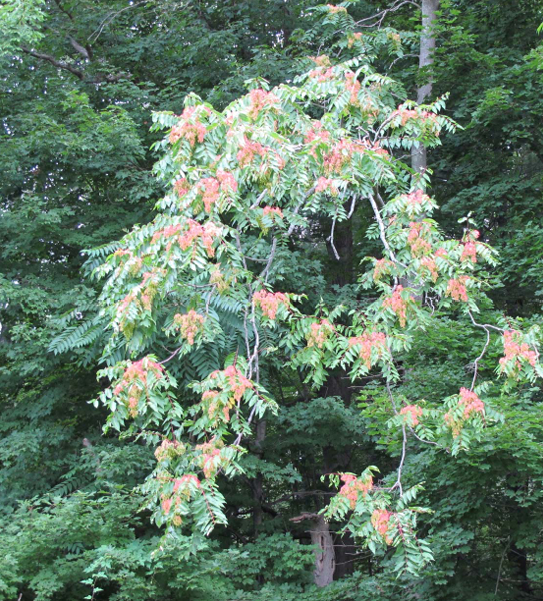
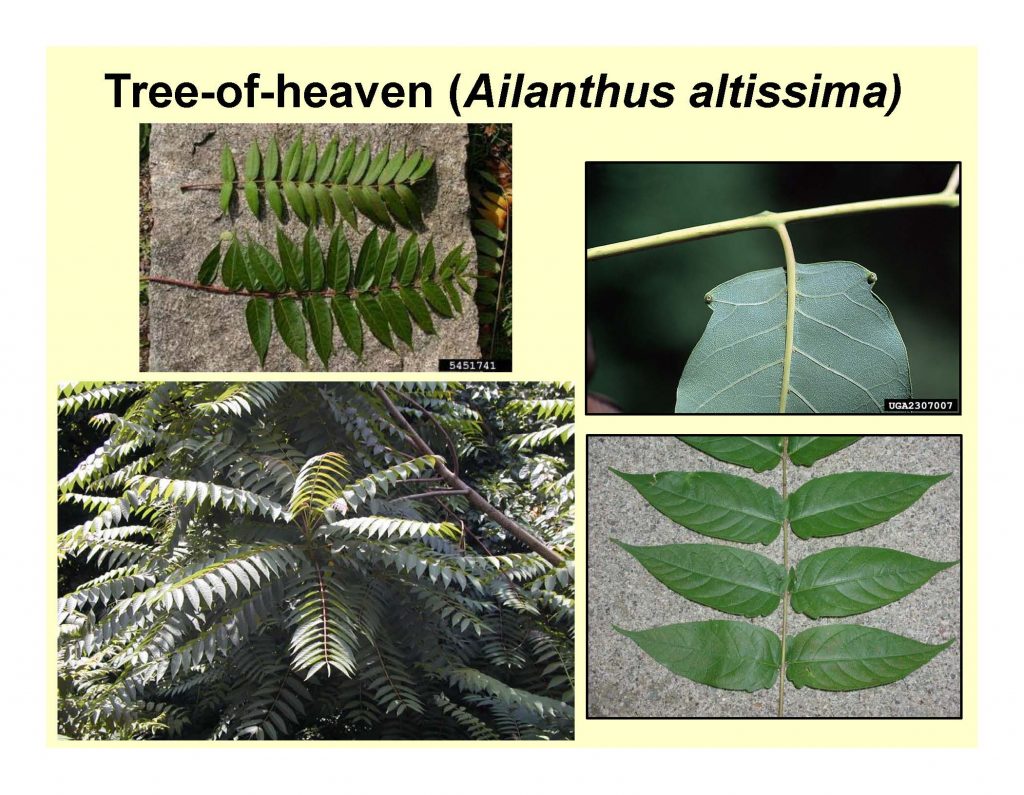
Tree-of-heaven (Ailanthus altissima)
- Urban tolerant
- Adaptable to compaction, salt spray, pollution etc.
- Fast (3-5’ annually)
MANAGEMENT
- MECHANICAL– Cut stems and paint with herbicide (glyphosate).
- CHEMICAL– Foliar spray after midAugust with glyphosate. Basal bark application with triclopyr (BEE) mixed in vegetable oil year-round.
- OTHER–Not treating cut stems with herbicide will result in extensive root suckering.
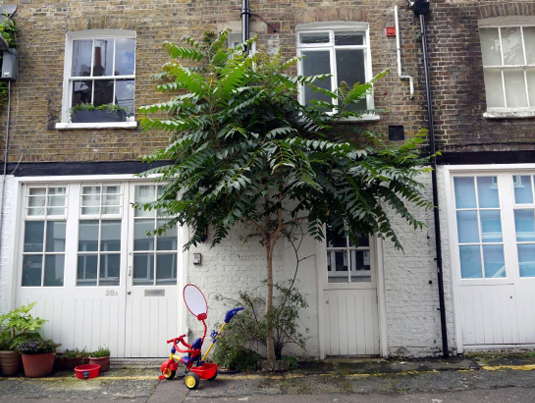
Tree-of-heaven Alternatives
Acer negundo cvs. Boxelder
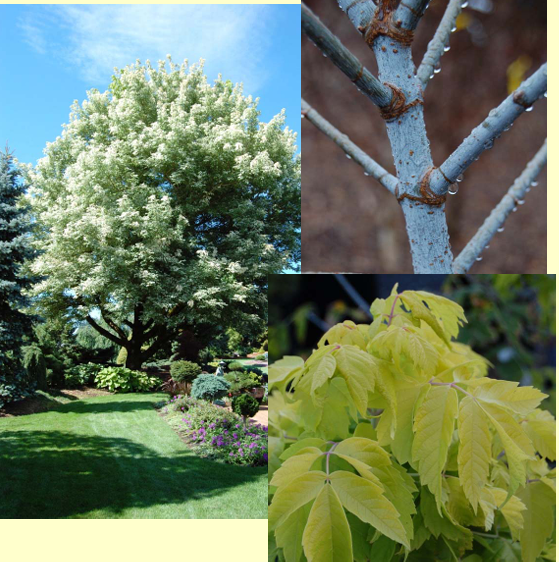
Rhus typhina – Staghorn Sumac

Garlic Mustard (Alliaria petiolata)
Site Conditions
- Sun/Shade
- Dry soils
- Riparian
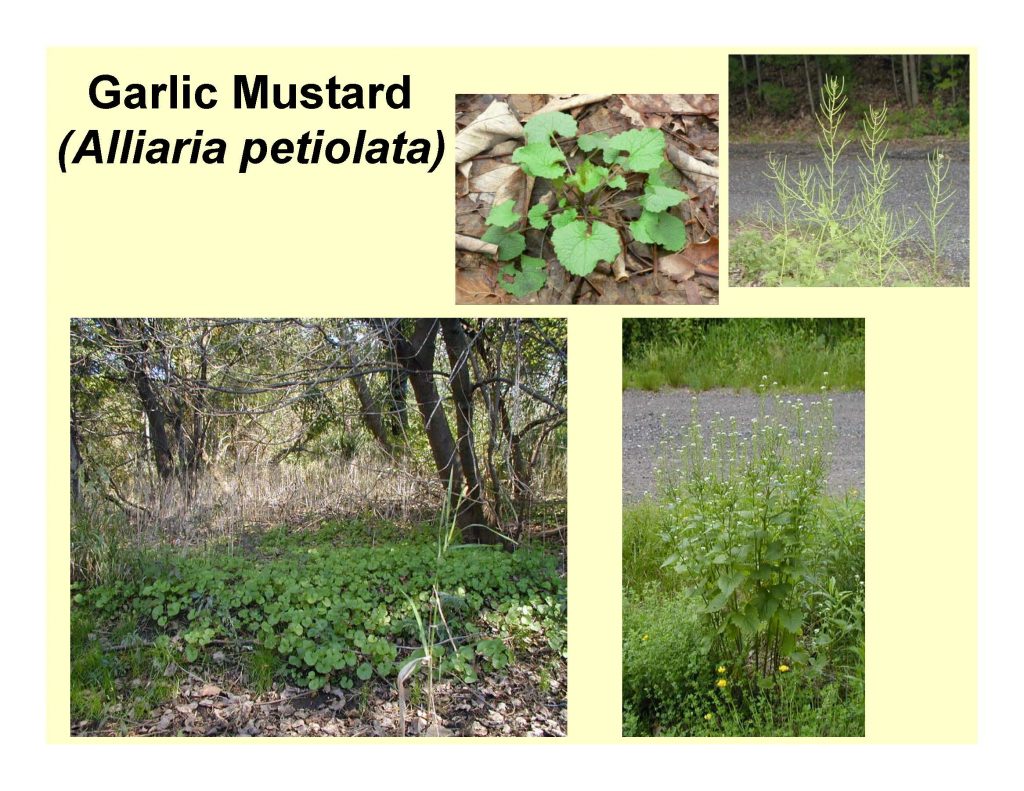
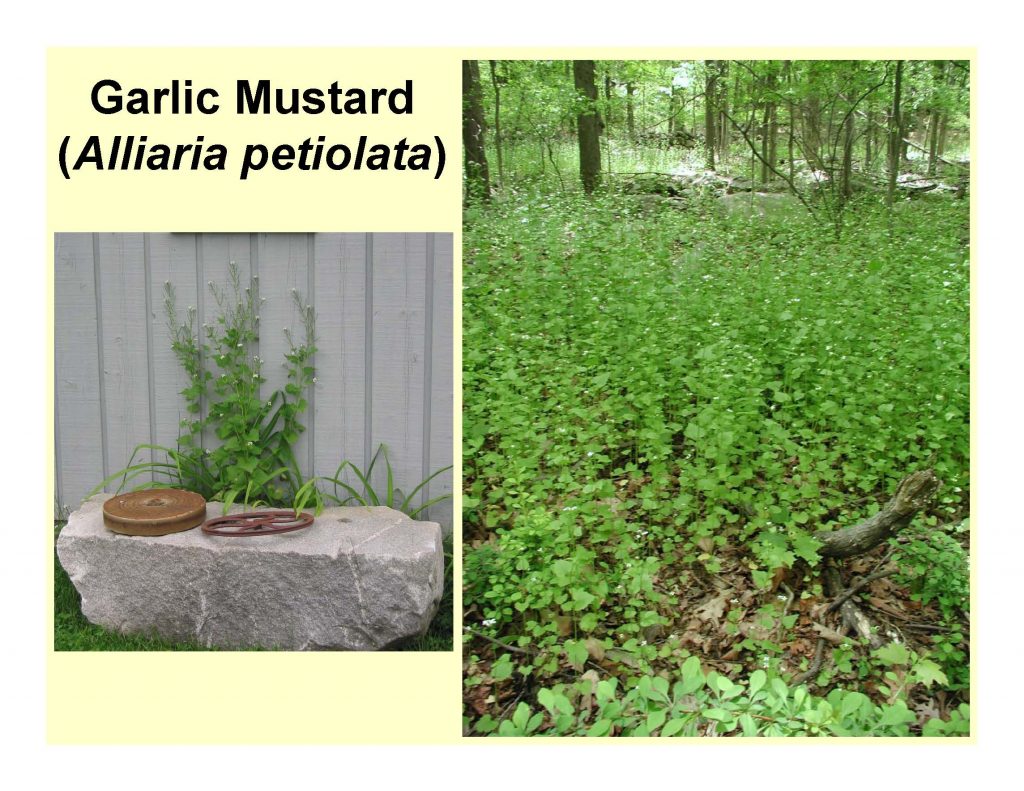
MANAGEMENT
- MECHANICAL– Pull plants between flowering and seed maturation.
- CHEMICAL– Foliar herbicide application glyphosate during basal stage or triclopyr prior to flowering.
- OTHER–Extensive seedbank will require several years of control.
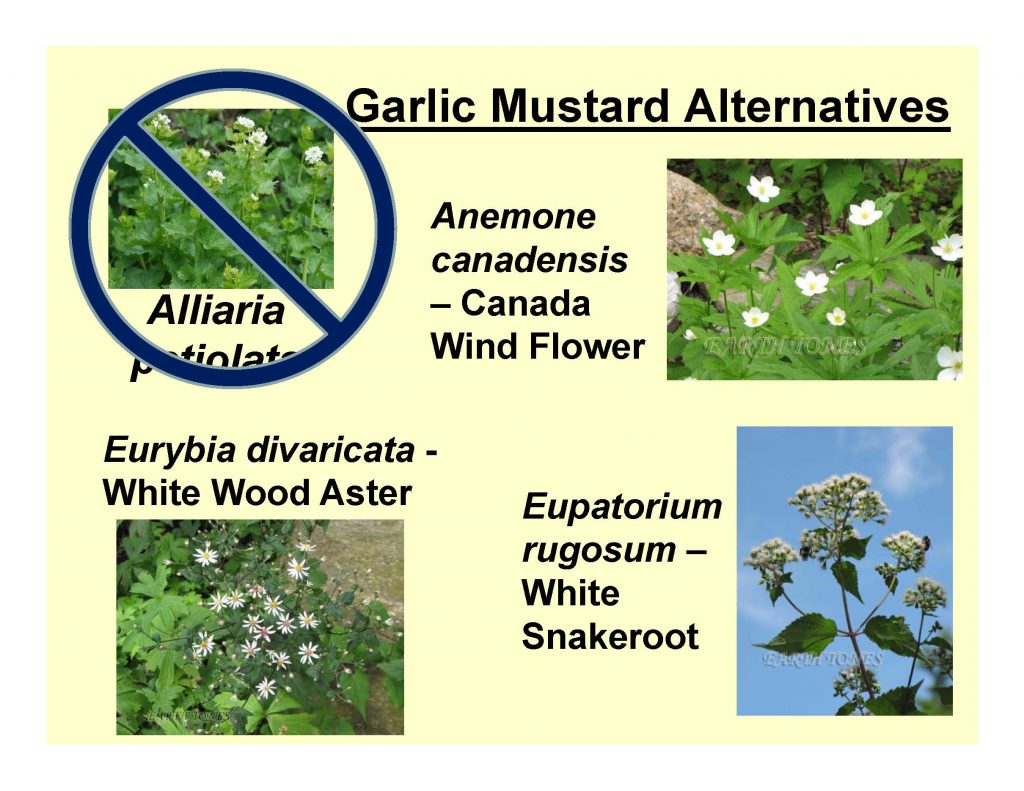
Mugwort (Artemisia vulgaris)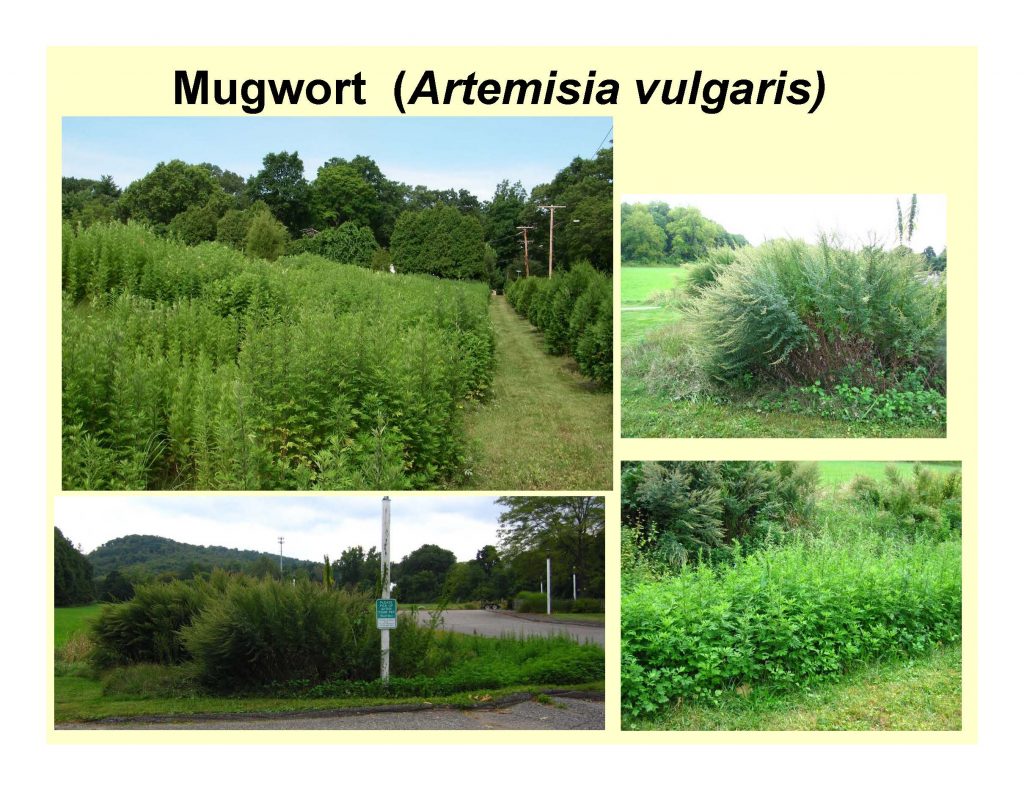
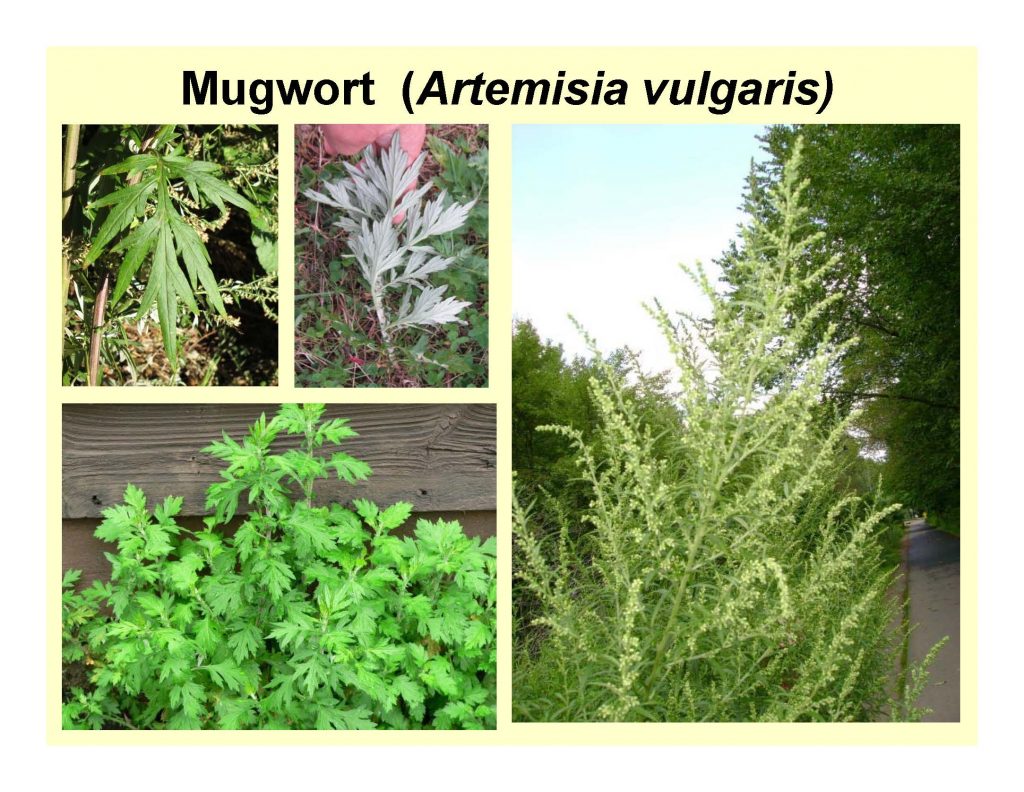
MANAGEMENT
- MECHANICAL– Mowing will stunt but not kill. Extensive rhizomes make pulling only effective for small, initial infestations. Repeated tilling is effective.
- CHEMICAL– Foliar spray of glyphosate during late season. Imazapyr or mixture of clopyralid/ triclopyr/glyphosate effective during rapid growth stage.
- OTHER–May be seed bank at some locations.
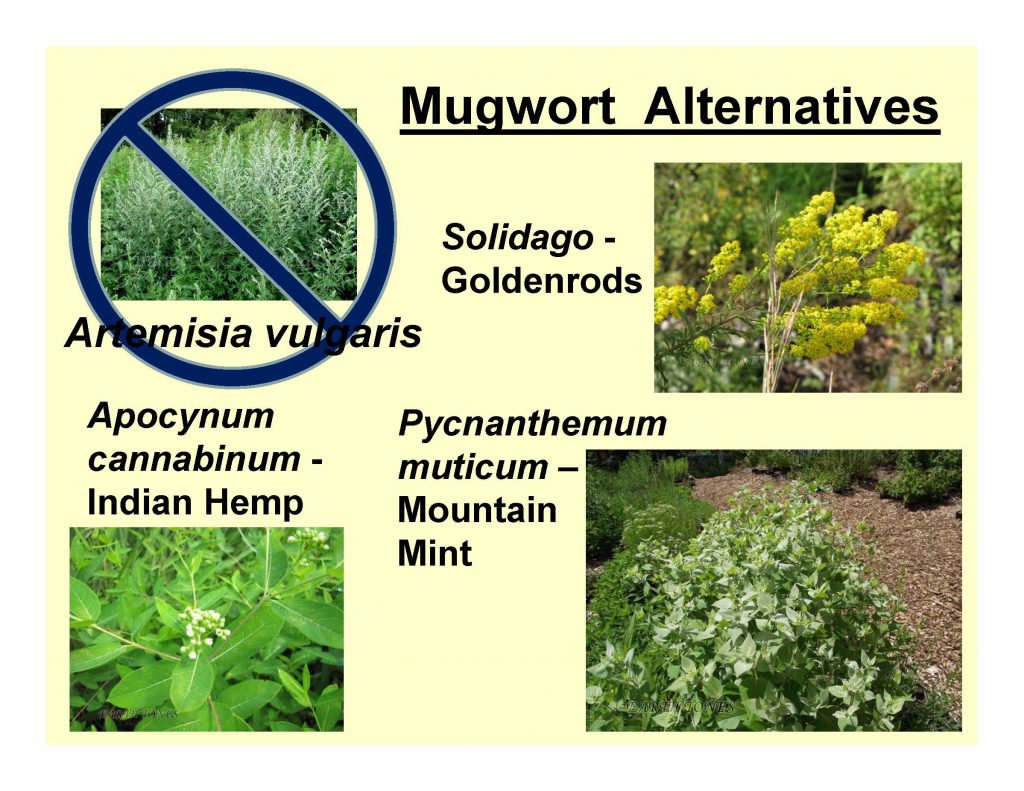
Japanese Barberry (Berberis thunbergii)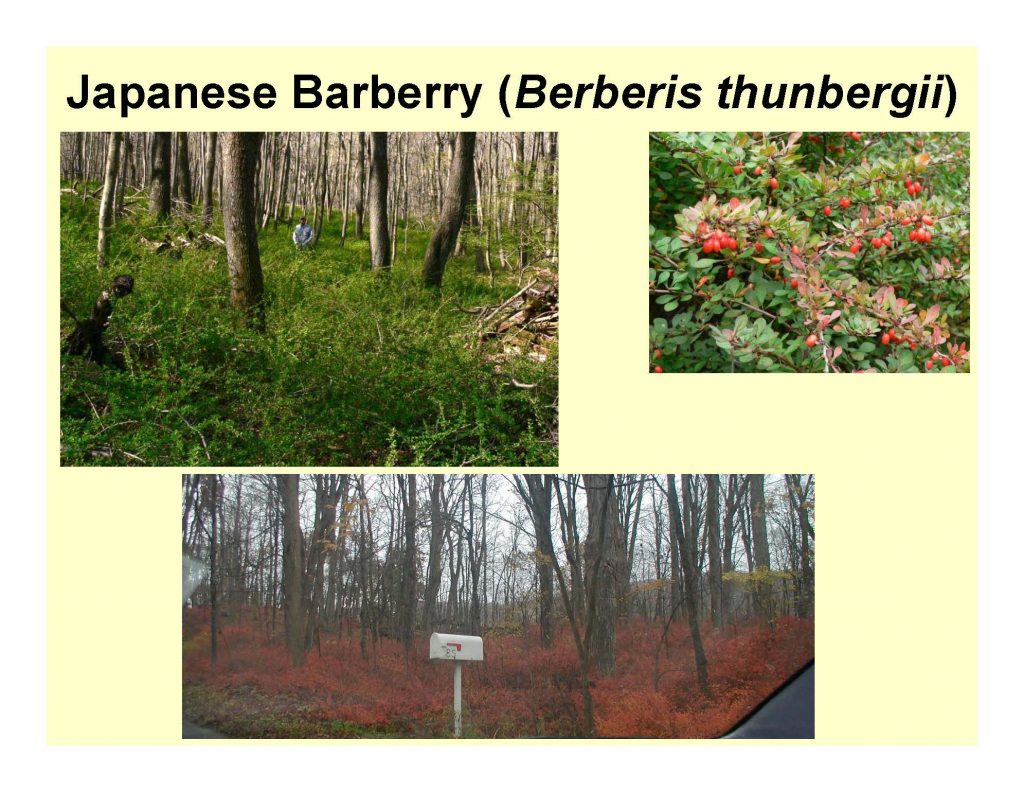
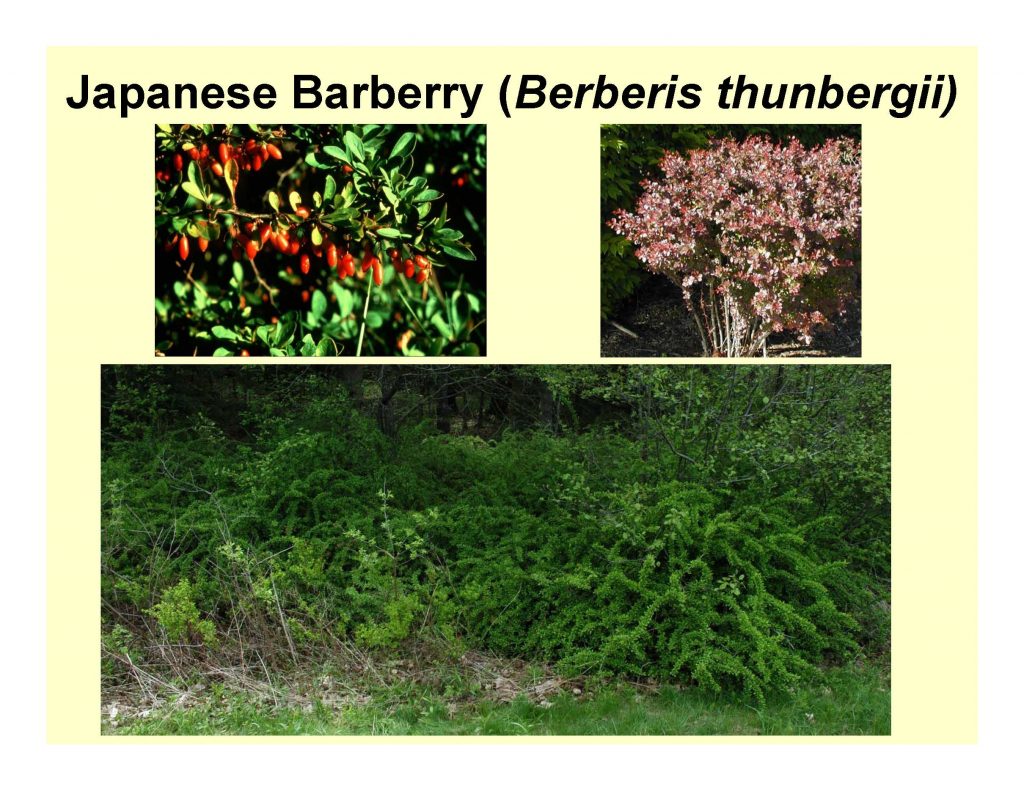
MANAGEMENT – MECHANICAL
- 1 – Mowing followed by directed heating with propane torch effective for small clumps in forest.
- 2 – Pulling only reasonable for very small clumps.
- OTHER–Because few seeds successfully establish under forest shade, no need to remove cut stems.
MANAGEMENT – CHEMICAL
- 1 – Foliar sprays of triclopyr, glyphosate, imazapyr and metsulfuronmethyl are effective.
- 2 – Cutting stems and painting cut stems effective, but labor intensive (use dye).
- 3– Foliar treatments effective from month after leaf expansion until autumn when leaves turned ¼ yellow.
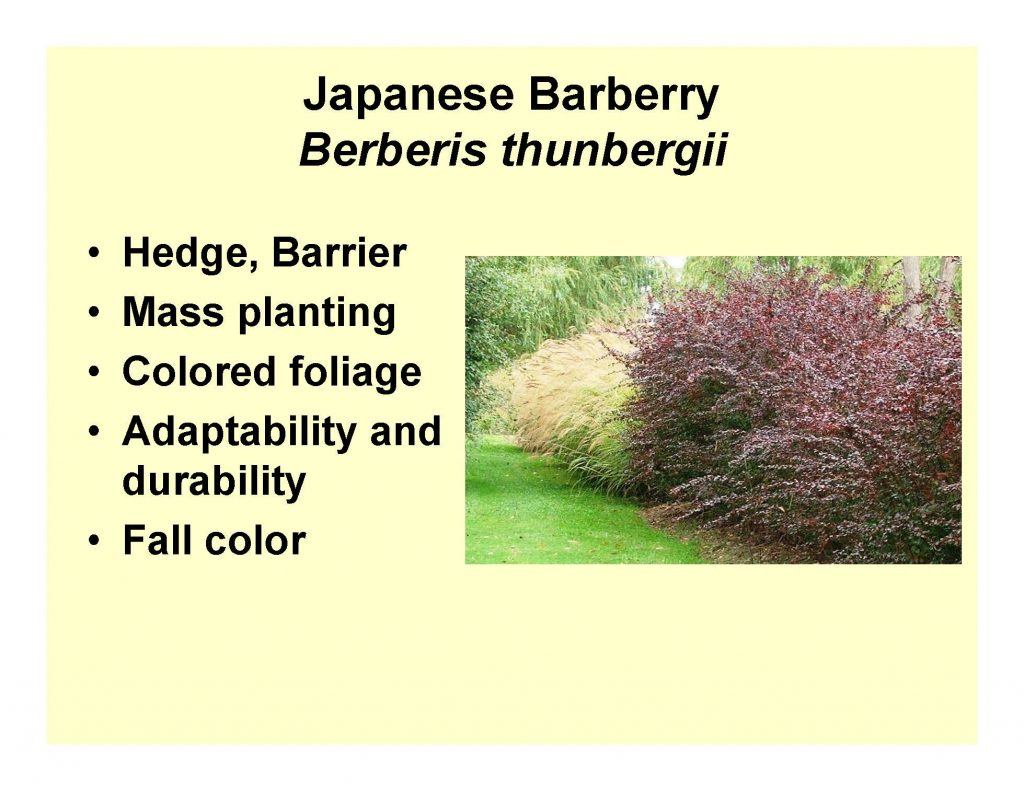
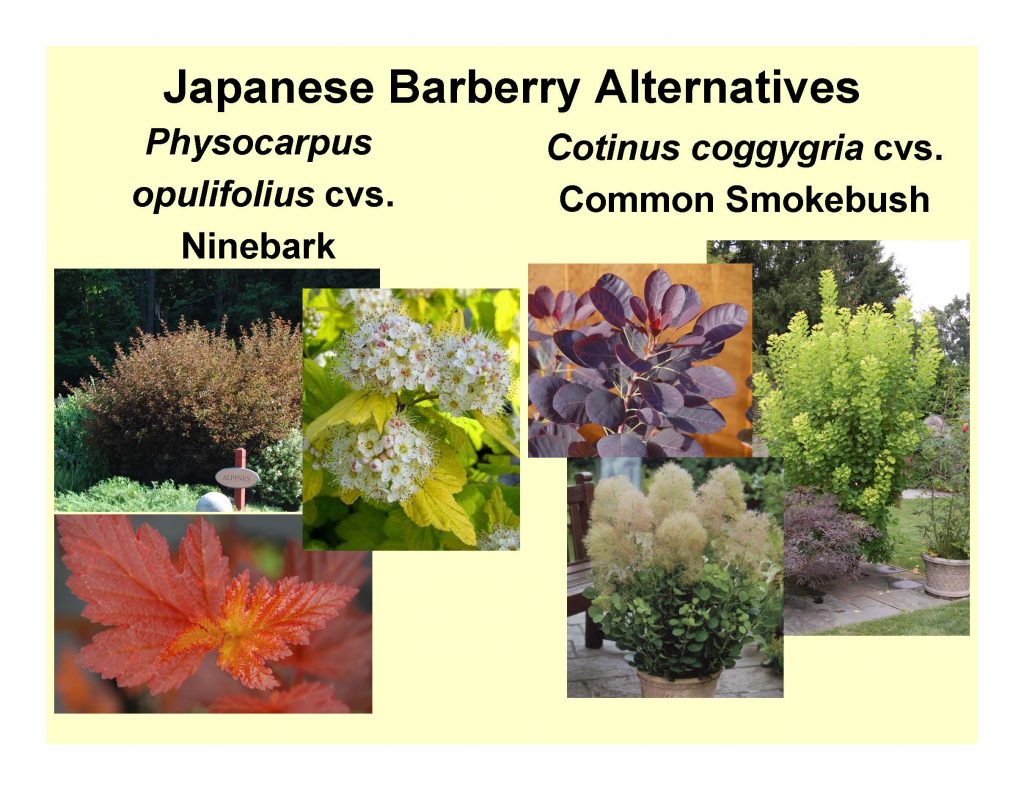
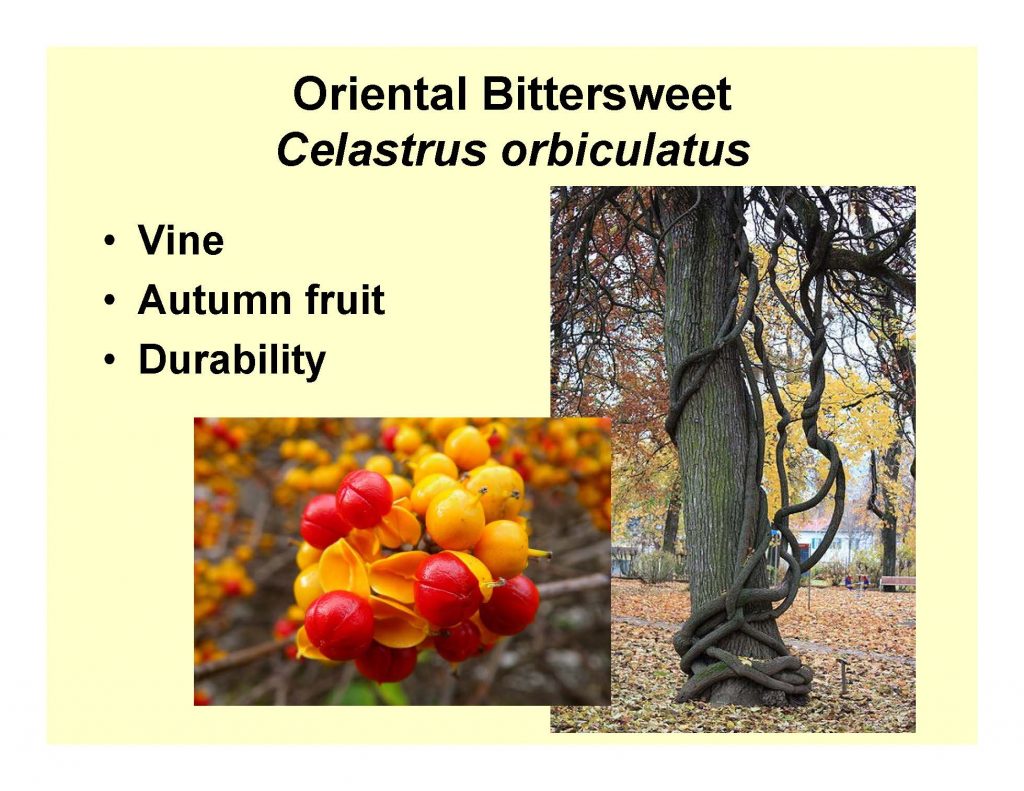
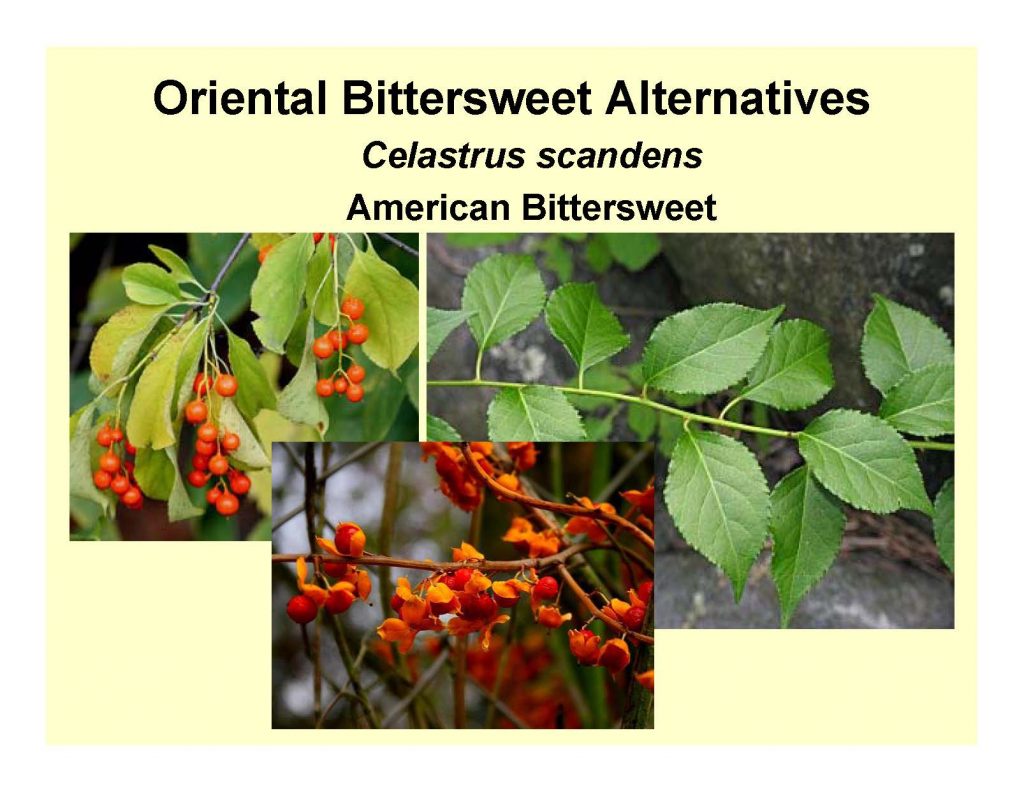
Oriental Bittersweet (Celastrus orbiculatus)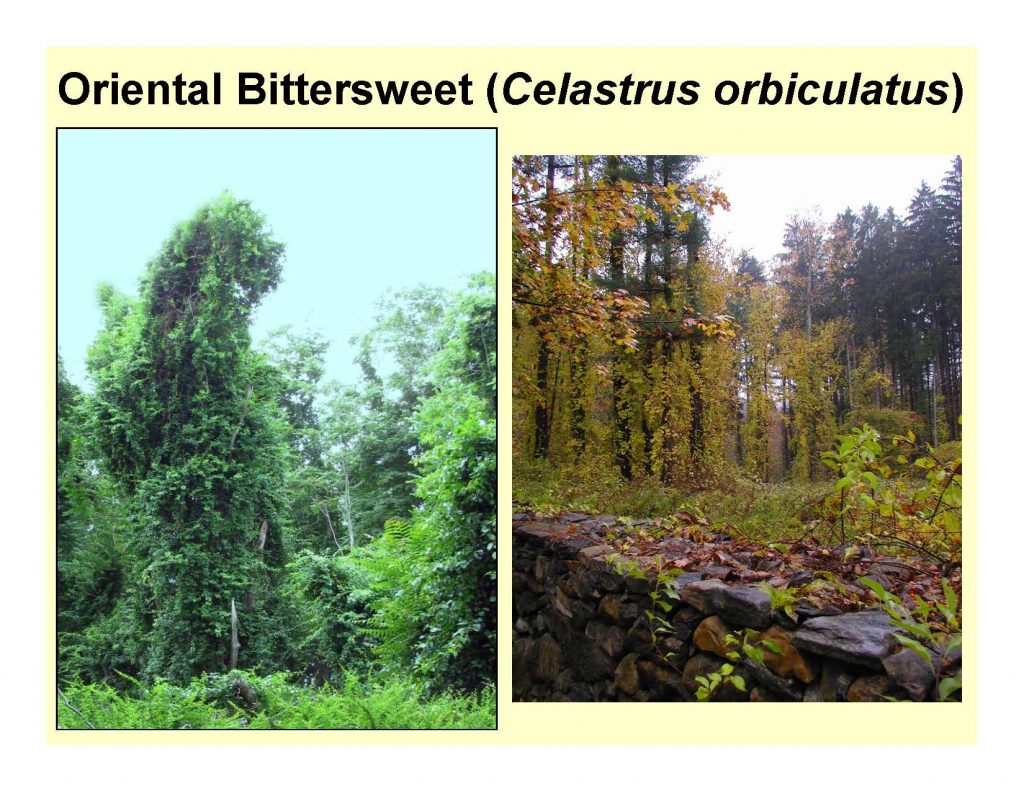
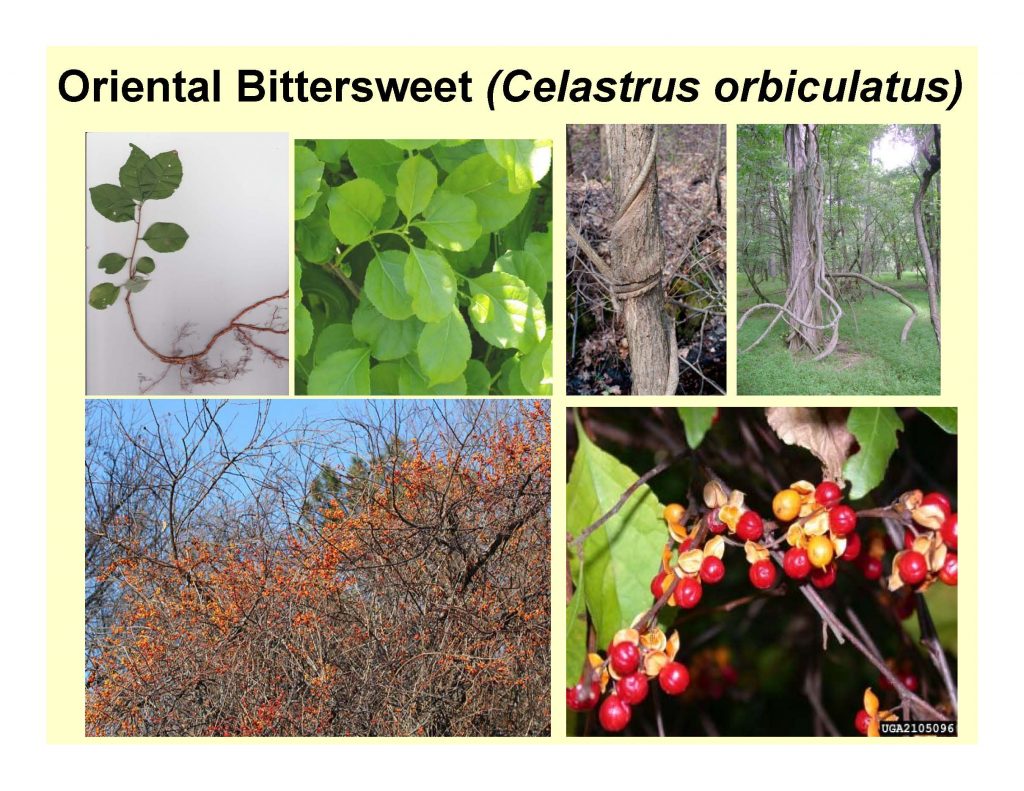
MANAGEMENT
- MECHANICAL– Cutting stems in trees will not control but will reduce seed production.
- CHEMICAL– Paint cut stems or foliar spray in late summer glyphosate*, triclopyr. Basal bark herbicide application (BEE) mixed in vegetable oil.
- OTHER–Deep root system makes pulling or torch impractical except for small stems. *Dreyer (1998) found glyphosate not effective.
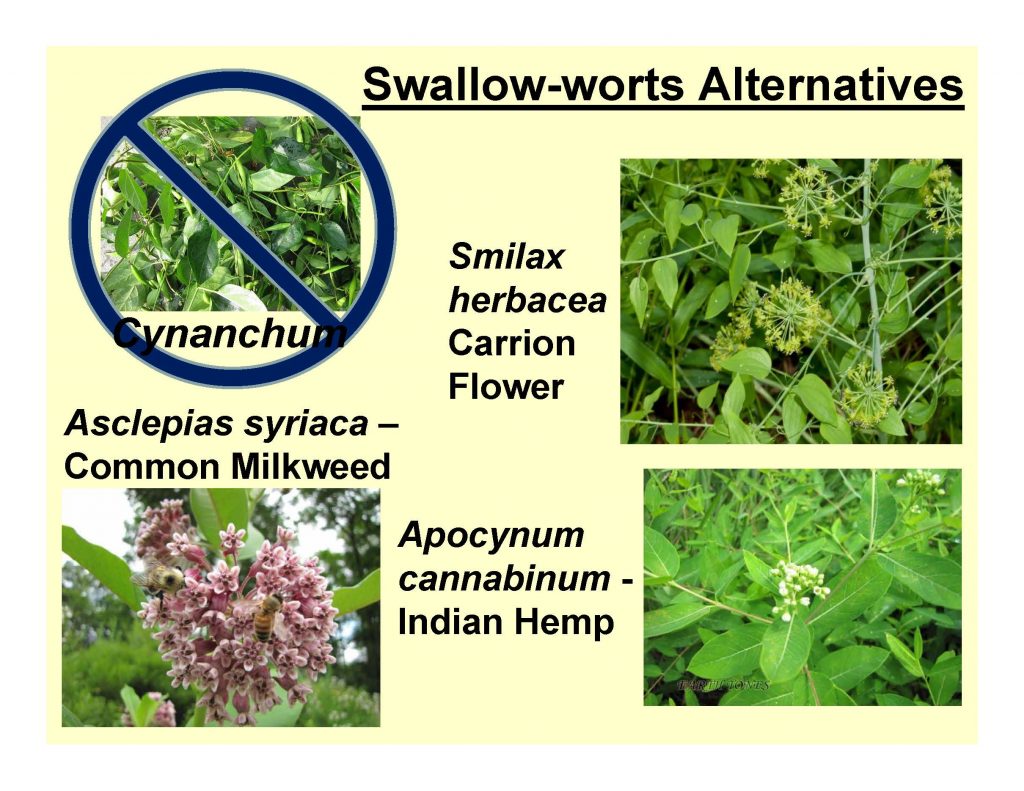
Swallow-worts (Cynanchum spp.)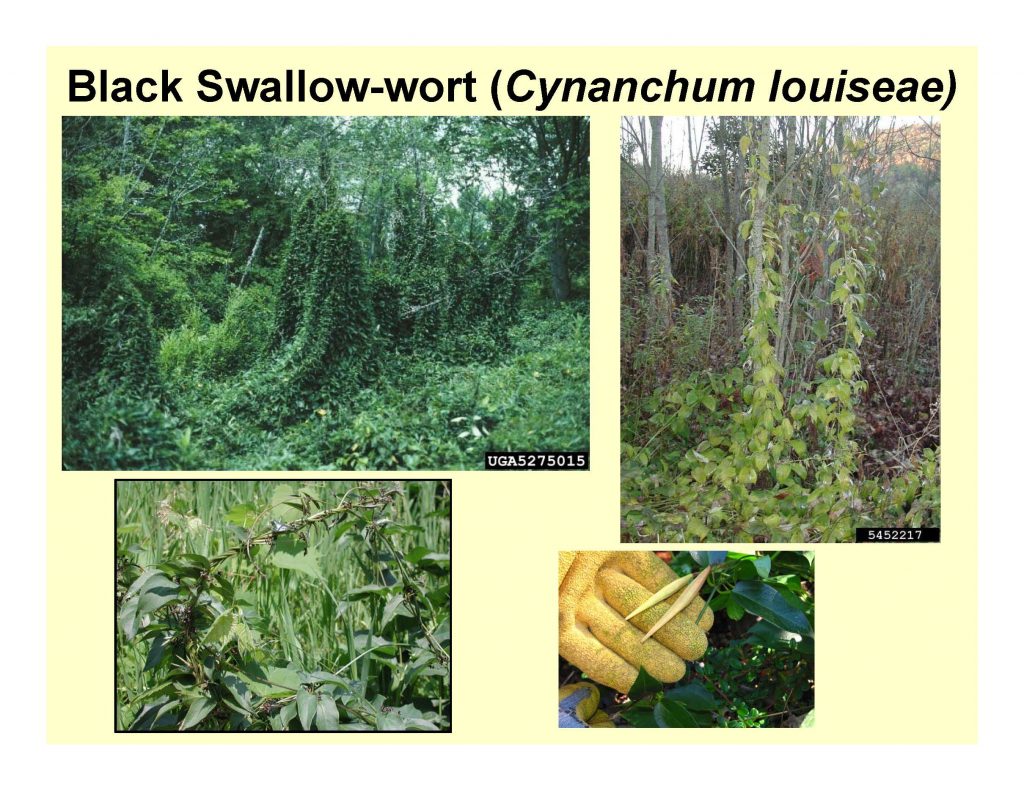
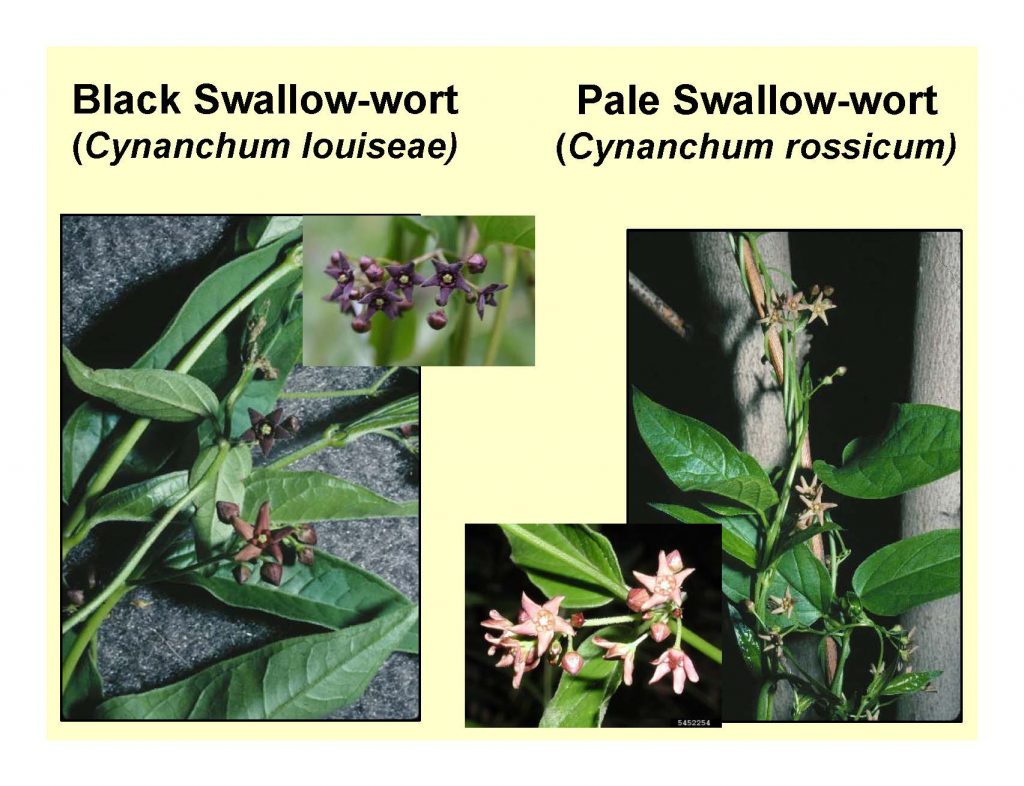
MANAGEMENT
- MECHANICAL– Cutting repeatedly will prevent production and dispersal of seeds, but regrowth from root crowns will occur.
- CHEMICAL– Foliar sprays w/ surfactant: Triclopyr most effective in late spring to early summer; glyphosate most effective in mid to late summer (before pods mature).
- CHEMICAL– Cut-stem treatments: In summer to early fall, apply glyphosate directly to freshly cut stems.
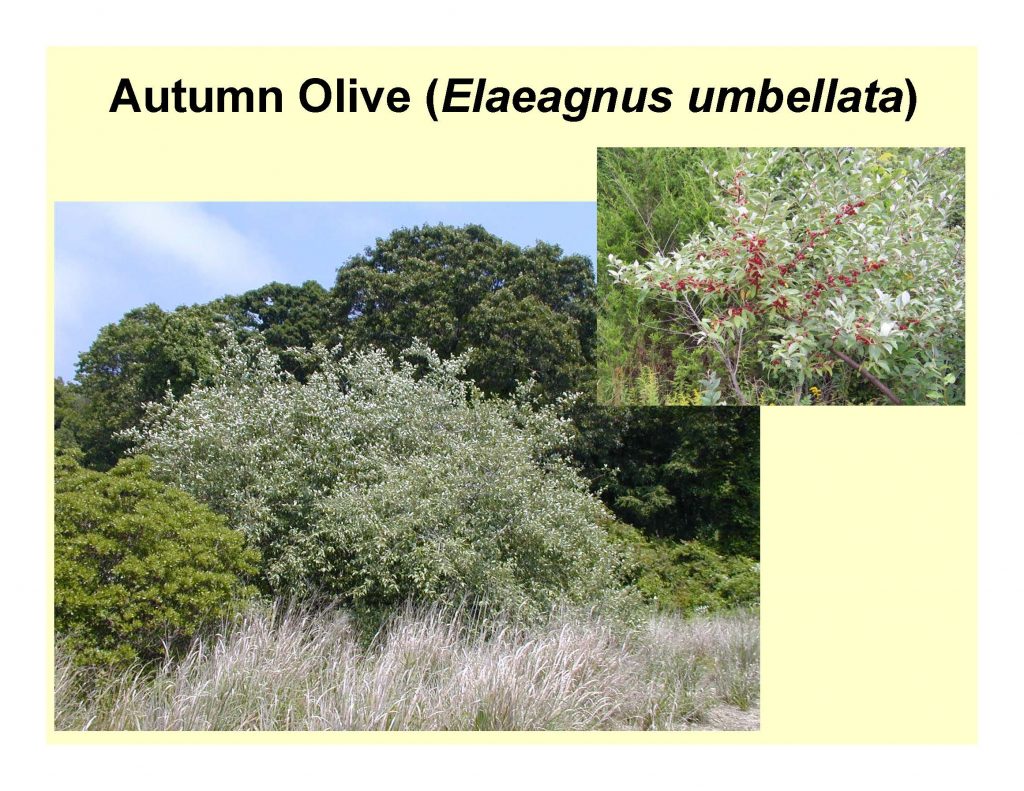
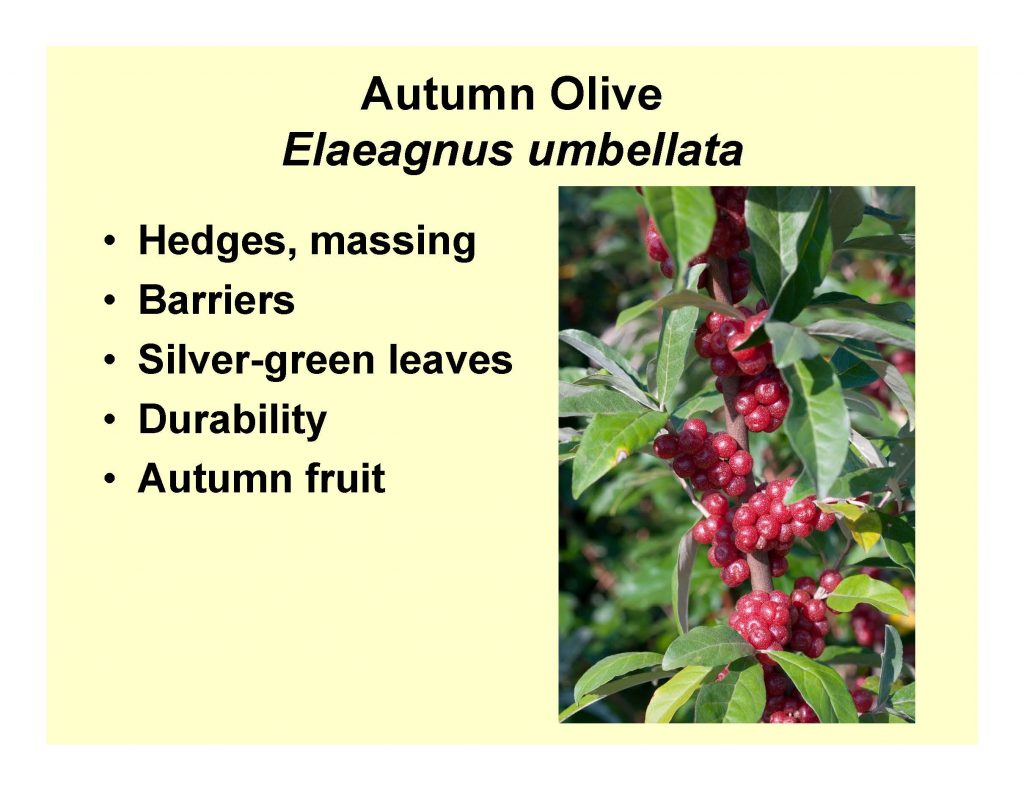
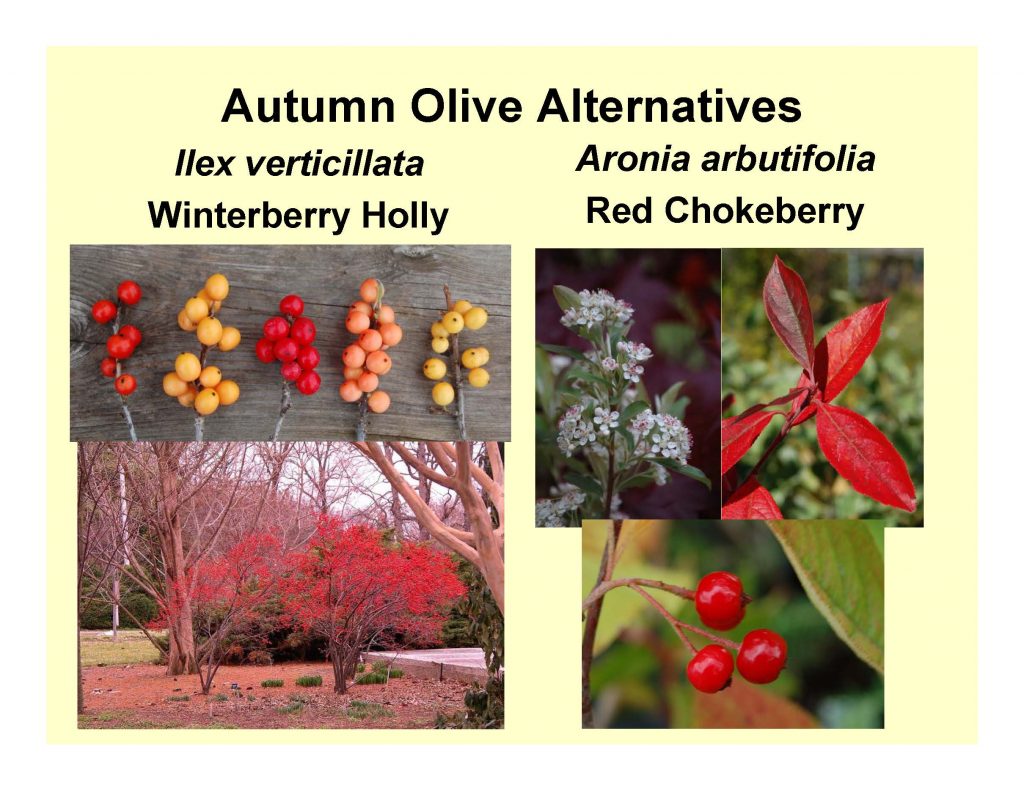
Autumn Olive (Elaeagnus umbellata)
MANAGEMENT
- MECHANICAL– Pull small stems. Propane torch in August may be effective.
- CHEMICAL– Foliar sprays with surfactant: Imazapyr, triclopyr or glyphosate … Imazapyr tends to be the most effective, especially early in growing season.
- CHEMICAL– Cut-stump treatments: Apply glyphosate or imazapyr directly to freshly cut stumps (late spring into fall).
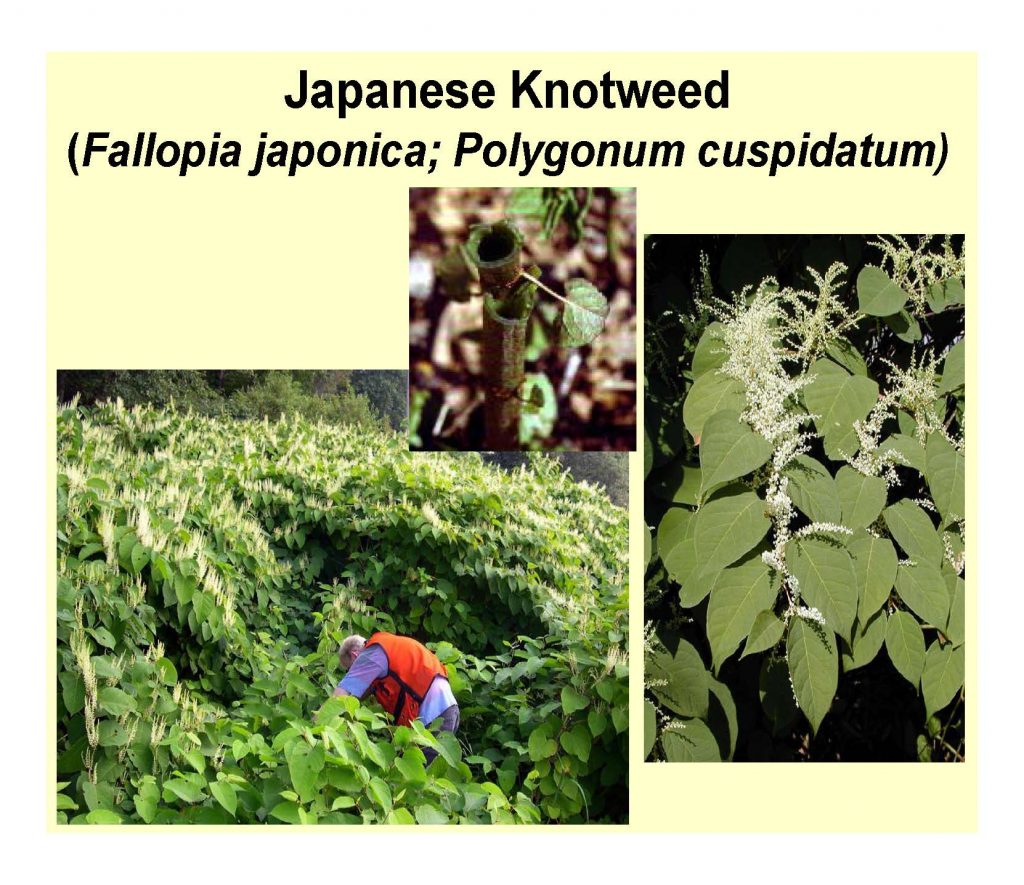
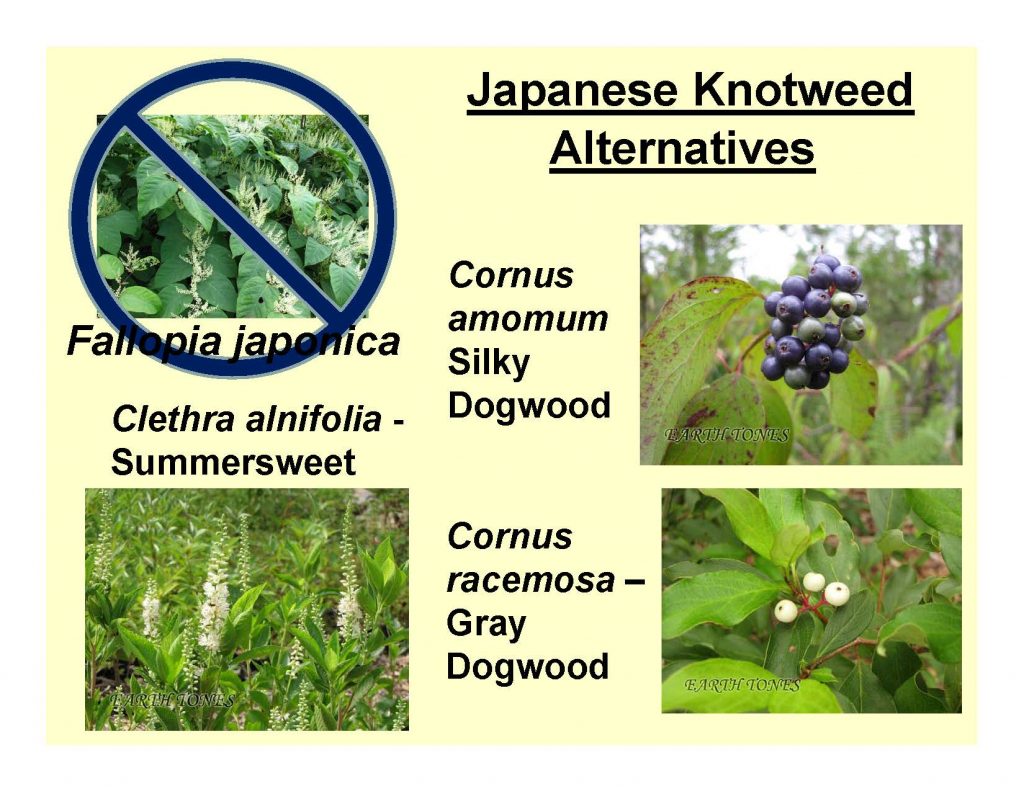
Japanese Knotweed (Polygonum cuspidatum)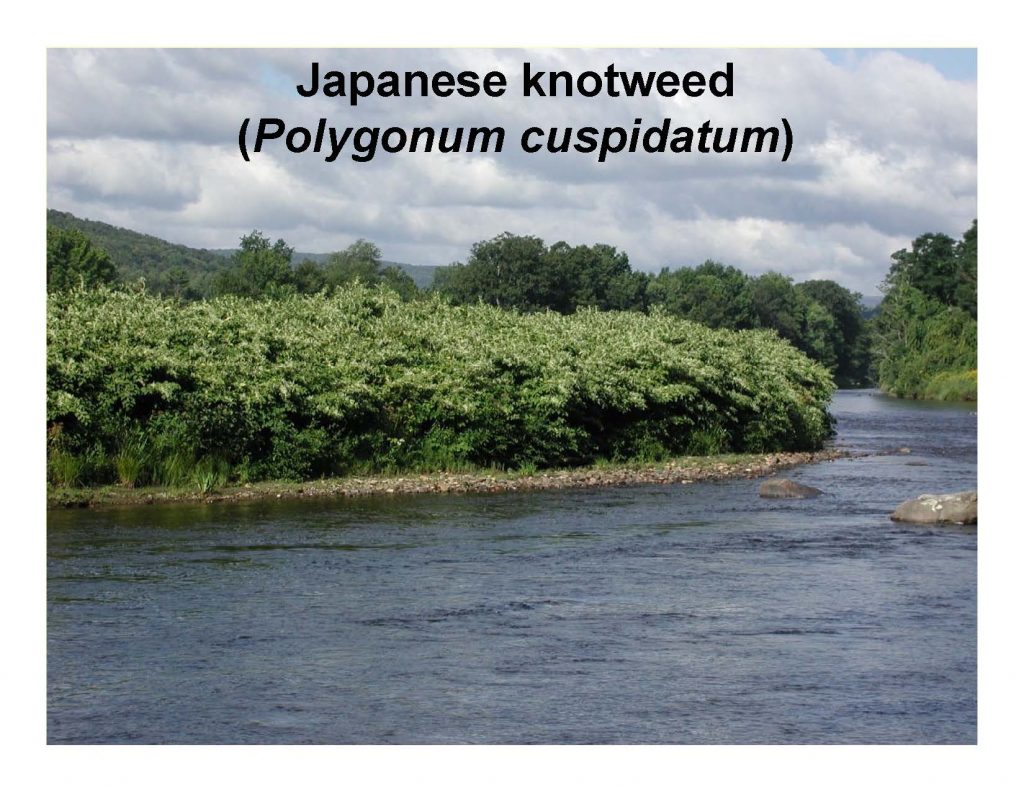
MANAGEMENT
- MECHANICAL– Repeated mowing will reduce but not eliminate.
- CHEMICAL– Foliar sprays of glyphosate or imazapyr effective in August or Sept. (before first frost). Stem injections of glyphosate suitable for small infestations.
- CHEMICAL– Foliar sprays of glyphosate or imazapyr effective in August or Sept. (before first frost). Stem injections of glyphosate suitable for small infestations.
Morrow’s Honeysuckle (Lonicera morrowii)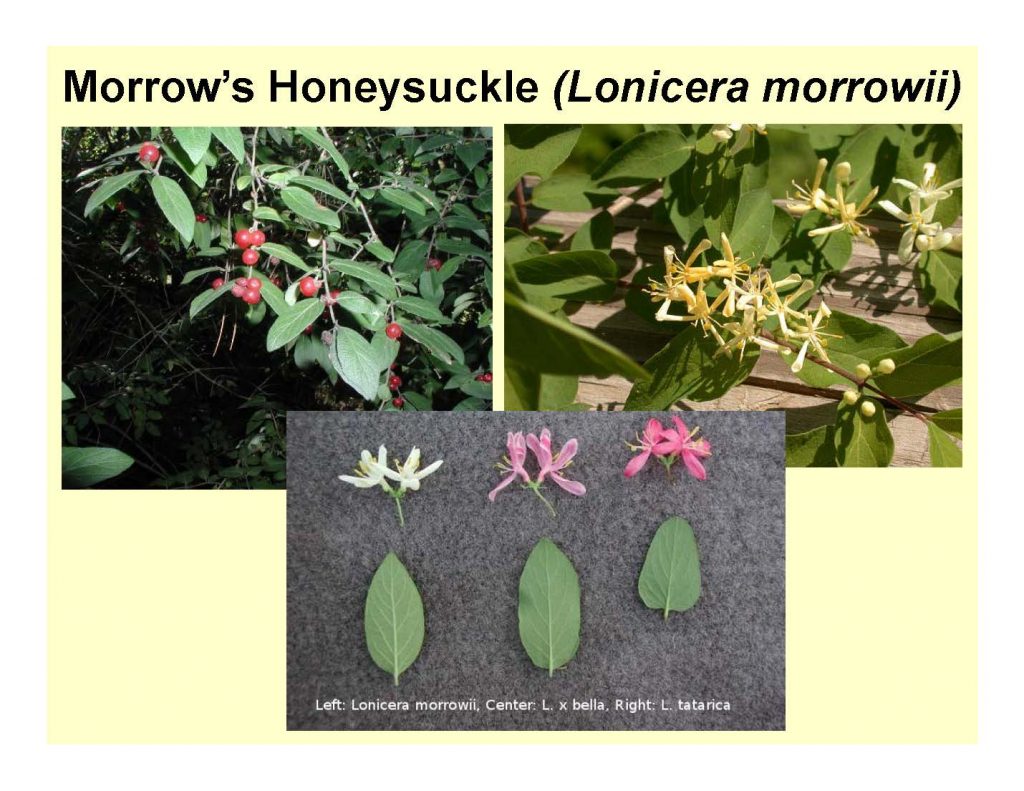
MANAGEMENT
- MECHANICAL– Repeated cutting prior to fruit development to prevent seeds.
- CHEMICAL– Foliar sprays of triclopyr in late spring to mid-summer, or glyphosate in mid to late summer. Cut-stump treatments: Glyphosate somewhat more effective than triclopyr.
- OTHER–Full leaf expansion is necessary for foliar applications or resprouting will occur.
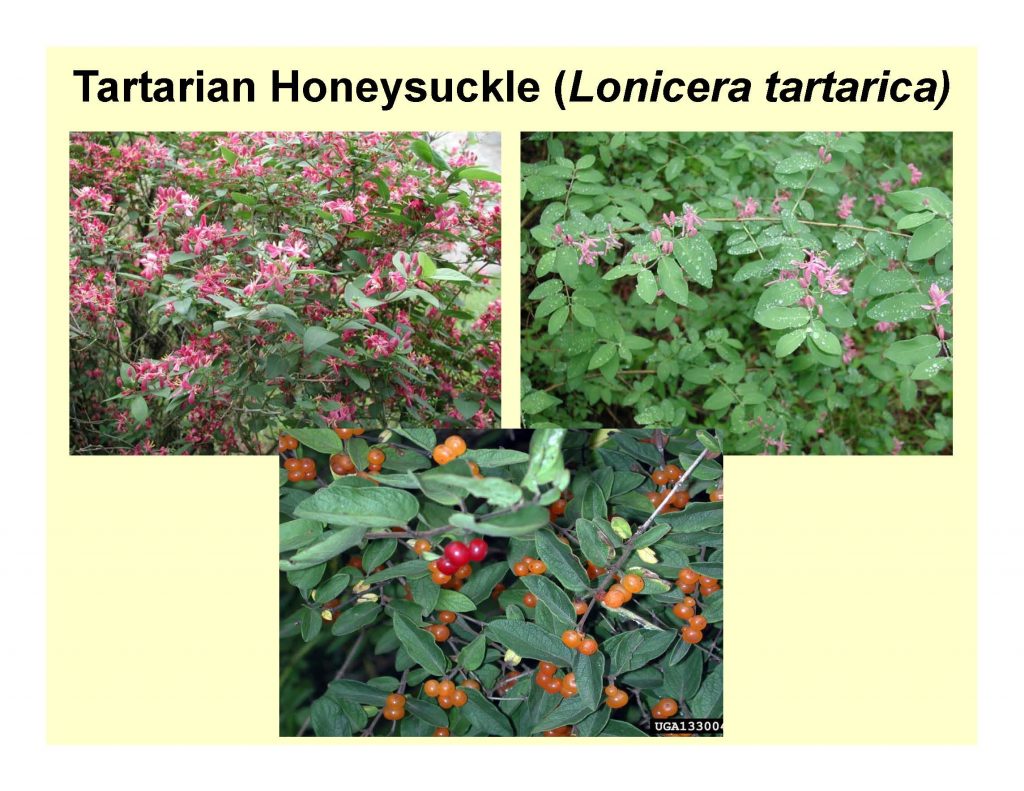
Shrub Honeysuckles (Lonicera spp.)
MANAGEMENT
- MECHANICAL– Pulling only reasonable for very small clumps
- CHEMICAL 1 – Foliar sprays of glyphosate, triclopyr (BEE) and imazapyr are effective. Addition of imazapyr or metsulfuron-methyl to glyphosate improves results.
- CHEMICAL 2 – Basal bark application of triclopyr (BEE) mixed in vegetable oil.

Japanese Stiltgrass (Microstegium vimineum)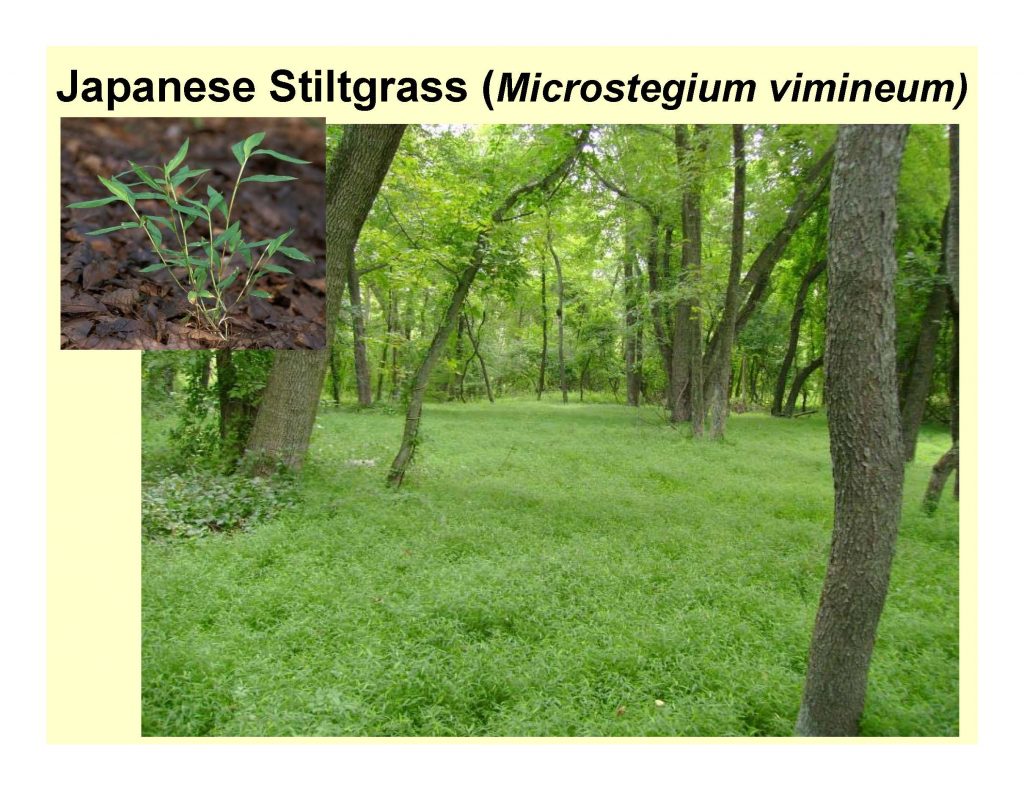
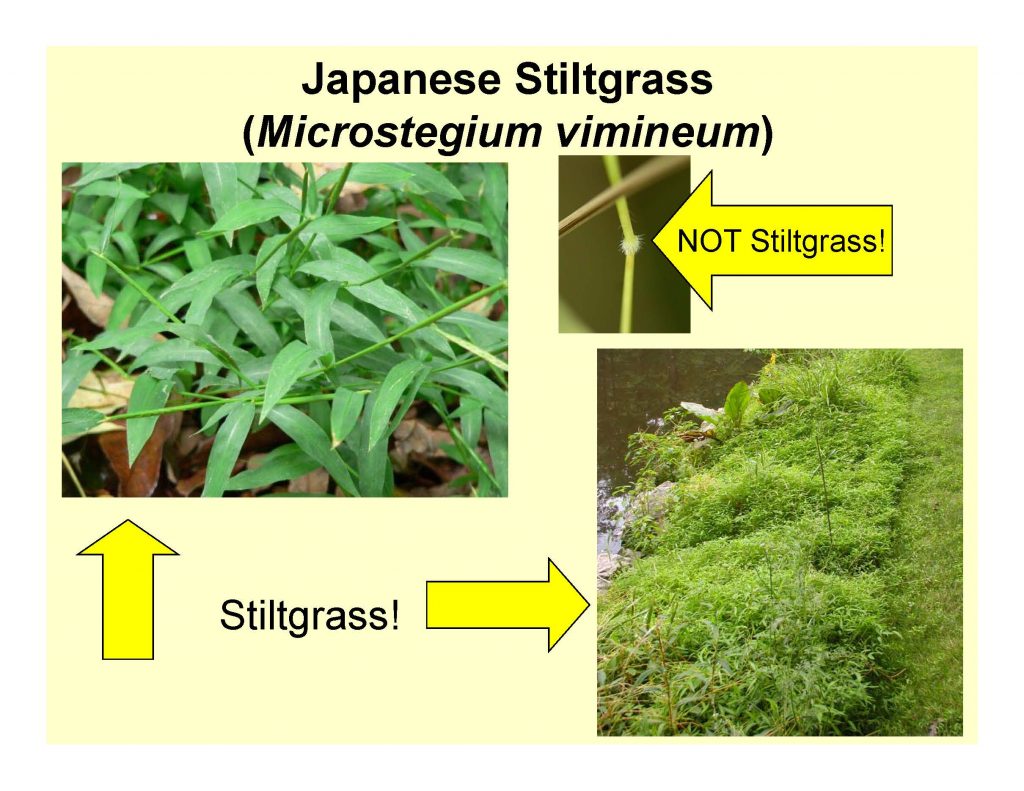
MANAGEMENT
- MECHANICAL – Pull plants between flowering and seed maturation; will require return visit to get missed plants.
- CHEMICAL (EFFECTIVE) – Foliar spray with imazapic, fenoxaprop-p-ethyl, glyphosate, pelargonic acid plus pendimethalin, and glufosinate.
- CHEMICAL (EXTRA) – Foliar spray at one quarter labelled rate was effective.