On Thursday, October 12, 2006, the Connecticut Invasive Plant Working Group
(CIPWG) presented “Working Together for the Landscape of Tomorrow”, a one day
symposium at the Mountainside Resort in Wallingford, CT.
Featured speakers included Connecticut Department of Environmental Protection
Commissioner Gina McCarthy and Les Mehrhoff, Director of the Invasive Plant Atlas of
New England (IPANE). The Plenary Speaker, Dr. Peter White, Director of the North
Carolina Botanical Garden addressed “Linking Ecology and Horticulture to Prevent
Plant Invasions”.
WORKING TOGETHER FOR THE LANDSCAPE OF TOMORROW
A Symposium presented by the Connecticut Invasive Plant Working Group (CIPWG)
October 12, 2006
The Mountainside Resort Wallingford, Connecticut
This symposium seeks to draw together members of nursery and landscape professions, conservation organizations, town commissions, gardeners, and the public into an informed discussion of the challenges present by invasive plants.
CO-SPONSORED by
American Public Works Association, New England Chapter
The Connecticut Agricultural Experiment Station
Connecticut Association of Conservation and Inland Wetlands Commissions www.caciwc.org
Connecticut Botanical Society http://www.ct-botanical-society.org
Connecticut Chapter, American Society of Landscape Architects
Connecticut College Arboretum
Connecticut Department of Environmental Protection https://portal.ct.gov/DEEP
Connecticut Forest and Park Association http://www.ctwoodlands.org/
Connecticut Green Industries
Connecticut Grounds Keepers Association http://www.cgka.org/
Connecticut Horticultural Society http://www.cthort.org/
Connecticut Tree Protective Association http://www.ctpa.org/
Connecticut Urban Forestry Council http://www.cturbanforestcouncil.org/
Conservation Districts of Connecticut http://www.conservect.org/
Deep Root Partners, L.P.
Eastern Connecticut Resource Conservation and Development Area, Inc.
The Federated Garden Clubs of Connecticut, Inc. http://www.ctgardenclubs.org/
Invasive Plant Atlas of New England www.ipane.org
National Park Service, Weir Farm http://www.nps.gov/wefa/
Natural Resources Council
The Nature Conservancy, Connecticut Chapter
New England Center for Invasive Plants
New England Invasive Plant Group
Norwalk River Watershed Association http://www.norwalkriver.org/
Silvio O. Conte National Fish & Wildlife Refuge https://www.fws.gov/refuge/silvio-o-conte
University of Connecticut
USDA, APHIS, PPQ
USDA Natural Resources Conservation Service, Connecticut office
Background
THE CONNECTICUT INVASIVE PLANT WORKING GROUP (CIPWG) is a consortium of individuals, organizations, and agencies concerned with invasive species issues. General meetings are held twice yearly and biennial symposiums have been held 2002, 2004, and 2006.
The mission of the Connecticut Invasive Plant Working Group is to gather and convey information on the presence, distribution, ecological impacts, and management of invasive species; to promote uses of native or non-invasive ornamental alternatives throughout Connecticut; and to work cooperatively with researchers, conservation organizations, government agencies, green industries, and the general public to identify and manage invasive species pro-actively and effectively. 1 November 1999
DEFINITIONS & CONVENTIONS FOR THE CIPWG 2006 SYMPOSIUM
- Naturalized plants do not qualify as native
- When describing a species as “native,” always include a geographic designation (i.e., native to).
- Just because a species is native to Connecticut doesn’t mean that it can be grown successfully anywhere in Connecticut.
- In Connecticut, the technical meaning of the term “invasive” implies a non-native species that causes ecological disruption; this does not include unwanted, aggressive, native species.
- All invasive species are non-native, but not every non-native species is invasive.
WELCOME FROM DONNA ELLIS, CO-CHAIR, CIPWG
Invasive Plants Are a Growing Concern
Invasive plants are non-native plants with origins outside of our area, from the continents of Europe and Asia or in some cases from other regions of the U.S. Invasive plants are a problem because they establish easily and grow aggressively where they are not wanted, disperse over wide areas, displace native species, and reduce biological diversity. These unwanted plants invade not only terrestrial habitats but water bodies as well, where they can grow and proliferate undetected for many years. Some invasive plants are more newsworthy because of their beauty (purple loosestrife), their poisonous traits (giant hogweed), or homeowner frustrations trying to control them (Oriental bittersweet).
Why are invasive plants becoming a growing concern? Estimates of environmental and economic impacts by invasive plants and efforts directed at their control surpassed $122 billion in the U.S. Invasive plants impact us directly or indirectly. Forest invaders such as garlic mustard and Japanese stilt grass aggressively overtake wildflowers and other native vegetation, reducing species diversity and making these natural areas so enjoyed by hikers and nature lovers less suitable for wildlife. Property owners struggle to eradicate autumn olive, multiflora rose, and Oriental bittersweet from backyard landscapes. Boaters and swimmers shy away from ponds and lakes choked with aquatic invasives such as Eurasian watermilfoil, water chestnut, and hydrilla.
Approximately 85% of the woody species (trees, shrubs, and vines) that are now considered invasive were intentionally introduced as plants for landscapes. Some familiar examples are Japanese barberry, winged euonymus (also known as burning bush), Norway maple, multiflora rose, and autumn olive. Although many of the introductions were well-intentioned for conservation purposes, erosion control, or gardening enjoyment, these non-native plants escaped from a cultivated setting and became naturalized in minimally managed habitats, thriving on their own without human assistance. A walk in your local woods is often all that’s needed to witness the impact these invaders are making to our natural areas.
The green industry is greatly concerned about the economic repercussions that will occur if commercially available ornamental species considered to be invasive or potentially invasive are banned or otherwise restricted. The green industry represents a significant growth area in northeastern agriculture, particularly in Connecticut, and produces higher returns per acre than other agricultural crops. The Connecticut Invasive Plants Council was established in 2003 as a result of Public Act No. 03-136 to address these and other invasive plant issues. The Council published the Connecticut Invasive Plant List in January 2004. The list includes 96 non-native plants that are invasive or potentially invasive. A second Public Act, No. 04-203, lists 81 invasive aquatic and terrestrial plants that are prohibited from sale, purchase, movement, import, cultivation, distribution, or transplanting. These 81 banned plants are a subset of the 96 invasive plants found on the Connecticut Invasive Plant List. Connecticut is one of many states to enact invasive plant legislation and joins other Northeastern states, including Maine, New Hampshire, Pennsylvania, and Vermont.
Losses to the environment are far more difficult to estimate than economic losses to the Green Industry. How do we replace a plant or animal species that now faces extinction due to the onslaught of an invasive non-native plant into its habitat? Some insects, for example, are solely dependent on one type of native plant for their existence and cannot simply adapt by moving onto a new invader in their community. Mechanical, chemical, and biological control efforts for invasive plants are on the increase, but these are usually focused on a more local level. A recent tally of invasive plant control projects by the Connecticut Chapter of The Nature Conservancy approached $1.8 million, further adding to the overall price tag of invasive plant management. Countless hours of volunteer efforts for invasive plant control contributed by individuals from many conservation organizations and the general public are also difficult to quantify.
The topic of invasive plants is often subject to debate: which plants are the worst invaders, are some cultivars more invasive than others, what’s the best way to control invasives, etc. There is agreement on one aspect of this debate, however, and that is the need to provide invasive plant education for everyone – for concerned citizens, for municipalities, for the green industry, and for local, state, and federal agencies and organizations. With this goal in mind, the Connecticut Invasive Plant Working Group was founded in 1997. With today’s symposium, “Working Together for the Landscape of Tomorrow,” we continue to work toward achieving this goal.
STANDARDS OF INVASIVENESS FOR INVASIVE PLANTS IN CONNECTICUT
from Section 3 of Connecticut Public Act 03-136 (May 2003)
- To be considered INVASIVE by the Connecticut Invasive Plants Council, a plant must meet all of the following criteria:
- Is nonindigenous to the state
- is naturalized or has the potential to become naturalized or occurring without the aid and benefit of cultivation in an area where the plant is nonindigenous
- under average conditions, the plant has the biological potential for rapid and widespread dispersion and establishment in the state or region within the state
- under average conditions, the plant has the biological potential for excessive dispersion over habitats of varying sizes that are similar or dissimilar to the site of the plant’s introduction into the state;
- under average conditions, the plant has the biological potential for existing in high numbers outside of habitats that are intensely managed
- occurs widely in a region of the state or a particular habitat within the state
- the plant has numerous individuals within many populations
- is able to out-compete other species in the same natural plant community; an
- has the potential for rapid growth, high seed production and dissemination and establishment in natural plant communities.
- To be considered POTENTIALLY INVASIVE by the Connecticut Invasive Plants Council, a plant must meet all of the first five criteria listed above and at least one of the criteria listed under (6) to (9) above
- “Upon a finding that a plant meets the criteria for listing as an invasive plant under subsection (a) of this section, or as a potentially invasive plant under subsection (b) of this section, prior to listing such plant as invasive or potentially invasive, as applicable, the majority of the council’s membership shall approve of such On the request of two or more members of the council, the council shall hold a meeting, open to the public, not later than thirty days prior to the publication of the initial invasive plant list or the addition of any plant to the invasive plant list, as applicable. “
PROGRAM: THURSDAY, OCTOBER 12, 2006
WORKING TOGETHER FOR THE LANDSCAPE OF TOMORROW
8:00 – CHECK-IN – VISIT POSTERS & EXHIBITS
9:05 – The Connecticut Invasive Plant Working Group: Leading the way
LES MEHRHOFF Director, Invasive Plant Atlas of New England (IPANE)
9:20 – No Time to Lose
GINA McCARTHY, Commissioner, Connecticut Dept. of Environmental Protection (DEP)
9:40 – WHAT’S NEW
Connecticut Invasive Plants Council Update
MARY MUSGRAVE Head, Dept. of Plant Science, University of Connecticut (UConn) Storrs
Massachusetts Invasive Plant Regulations Update, BRAD MITCHELL
Summary of Cultivar Issues, MARK BRAND Professor, Dept. of Plant Science, UConn, Storrs
10:20 – BREAK – VISIT POSTER DISPLAYS
10:45 – PLENARY SPEAKER: Linking Ecology and Horticulture to Prevent Plant Invasions
PETER WHITE, Professor, Biology Department, University of North Carolina, Chapel Hill & Director, North Carolina Botanical Garden
11:45 – LUNCH
1:00 – CONCURRENT SESSIONS
2:30 – BREAK
2:45 – CONCURRENT SESSIONS
3:00 – PANEL DISCUSSION
4:30 – SOCIAL HOUR & FINAL POSTER VIEWING
1:00 – 3:25 CONCURRENT SESSIONS
Session 1. Alternatives to Invasive Plants
Session 2. Restoration: Establishing a Native Landscape
Session 3. Management: Planning and Control
Attendees who wish to move among sessions are asked to exit and enter the rooms during the last five minutes of the time period.
| TIME | Session 1
Alternatives |
Session 2
Restoration |
Session 3
Management |
| 1:00 – 1:30 | Adam Wheeler Well-behaved Woodies | Mark Gormel The Seven Steps Toward Successful (and Ethical) Native Seed Collection |
Betsy Lyman Guidelines for Restoration and Control: Good Luck vs. Good Planning |
| 1:30 – 2:00 | Steve Taylor Herbaceous Alternative Plants | Martin Cubanski
Seeding Native Woody Plants for Bareroot Harvesting |
Todd Mervosh
Herbicides: How They Work, and What Happens to Them |
| 2:00 – 3:00 | Mark Sellew American Beauties Native Plants | Peter Picone Selecting Plants for Ecological Diversity: Plants and Wildlife are Inextricably Linked | Christopher Mattrick
Get ’em Early! Management Strategies for Small to Moderate Invasive Plant Infestations |
| 2:30 – 2:45 | BREAK | BREAK | BREAK |
| 2:45 – 3:25 | Kristin Schwab Using Alternative Plants to Create Sustainable Landscapes | Mark Gormel Direct Seeding in the Landscape: Meadows and Beyond |
Jessica Murray Weed It Now: Invasive Species Control at Large Scale |
3:30 Panel Discussion (see next page) 4:30
Social Hour and Final Poster Viewing
PANEL DISCUSSION
The Panel members were chosen to represent a diversity of interests, expertise, and approaches to working with invasive plant-related issues.
Ann Camp
- Lecturer and Senior Research Scientist, Yale School of Forestry & Environmental Studies
Paul Larson
- Connecticut Invasive Plants Council & Co-owner, Sprucedale Gardens
Christopher Mattrick
- Forest Botanist, White Mountain National Forest
Kristin Schwab
- Associate Professor of Landscape Architecture, University of Connecticut, Department of Plant Science
Mark Sellew
- Owner, Prides Corner Farms,
Patricia Sesto
- Director of Environmental Affairs, Town of Wilton, Connecticut
David Sutherland
- Connecticut Invasive Plants Council & The Nature Conservancy
Panel Format
The point of the panel is to get people talking and thinking together. The panel is NOT a debate.
The room will contain at least one large box in which members of the audience may temporarily cache their egos, soapboxes, axes they like to grind, etc.
Following a short introduction, panel members will respond to questions from the audience (directed toward individual panel members or to the panel in general).
The Charge to Panel Members was:
- Provide technical information and expert opinion in answer to questions from the We do not expect every panel member to address every question.
- Offer symposium attendees a diversity of ideas and approaches to working together on topics of mutual interest relating to invasive plant control, restoration of invaded sites, and alternatives to invasive plants.
Goal for the Panel
Attendees will walk away with some inspiration and practical ideas on “What are some ways we can work together to move forward with invasive plant-related projects and activities in CT”.
POSTERS AND EXHIBITS
POSTERS
An Identification Key for Japanese Barberry (Berberis thunbergii DC.) Cultivars Using AFLP Markers – Jessica D. Lubell, Mark H. Brand, and Jonathan M. Lehrer
Connecticut Agricultural Experiment Station Invasive Aquatic Plant Program
- Roslyn Selsky and Michelle Marko
Control of Phragmites australis in CT – Paul Capotosto, Chris Samor and Roger Wolfe
Developing a Town of Mansfield, CT Invasive Plants Control Program
- Jennifer Kaufman and Jean Haskell
Ecological Landscaping Demonstration – Tolland County Agricultural Center
- Vivian Felten
Endangered Birds and Invasive Plants: How would YOU manage Great Gull Island? Maura Leahy and Ann Camp
Exmoor Ponies in Conservation Grazing: An alternative control measure for certain invasive flora
- Lisa Wojan, DVM and Joseph Struckus, PhD
Giant Hogweed (Heracleum mantegazzianum) and Mile-a-minute Vine (Polygonum perfoliatum): Distribution and management – Donna Ellis, Betsy Corrigan, and Todd Mervosh
In vitro polyploidy induction, microcutting rooting, and bud dormancy release in Euonymus alatus ‘Compactus’ – Maria L. Clements and Mark H. Brand
Management of Oriental Bittersweet Vines and Pale Swallowwort at Bluff Point State Park and Coastal Reserve – Todd Mervosh and David Gumbart
Propane torches: A novel method to control barberry – Jeffrey S. Ward
Reclaiming Invasive-infested Land by Planting Native Species at Gateway National Recreation Area” – Michael D. Byer
Regeneration Strategies of Japanese Barberry (Berberis thunbergii DC. in coastal forests of Maine
- Jennifer D’Appollonio and William Livingston
Rosa Hartman Park Test Plots – Erin McKenna
Seedling Populations Produced by Colored-leaf Genotypes of Japanese Barberry (Berberis thunbergii DC.) Contain Seedlings with Green Leaf Phenotype
- Jonathan Lehrer, Mark H. Brand, and Jessica D. Lubell
Stopping Water Chestnut at the Landscape Scale in the Connecticut River Watershed – Cynthia Boettner and Beth Goettel
Tools of the Trade for Invasive Plant Control – Chris Polatin
When Hybrids Go Wrong: How hybridization can create invasive plants – Collin Ahrens
White-Tailed Deer as Seed Dispersal Agents – Scott C. Williams and Jeffrey S. Ward
EXHIBITS
Connecticut Chapter, American Society of Landscape Architects (ASLA) Connecticut Groundskeepers Association
Connecticut Invasive Plant Working Group (CIPWG) Connecticut Department of Environmental Protection (DEP) Connecticut DEP Bookstore
Eastern Connecticut Resource Conservation and Development Area, Inc. (RC&D) The Federated Garden Clubs of Connecticut, Inc.
Invasive Plant Atlas of New England (IPANE) New England Center for Invasive Plants
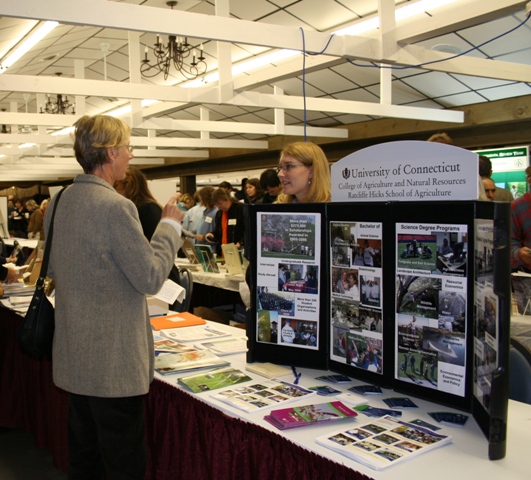
New England Invasive Plant Group (NIPGro) Northeast Organic Farming Association (NOFA) Silvio O. Conte National Fish & Wildlife Refuge University of Connecticut Academic Programs
University of Connecticut Office of Communications and Information Technology University of Connecticut Master Gardener Program
USDA Natural Resources Conservation Service
ORAL ABSTRACTS
Morning Sessions
Leslie J. Mehrhoff, Director, Invasive Plant Atlas of New England, “The Connecticut Invasive Plant Working Group: Leading the way”
The Connecticut Invasive Plant Group (CIPWG) was formed in 1997 to bring together people who were concerned with the increasing impacts to Connecticut’s biological diversity caused by aggressive, non-native plant species. The first meeting was held 20 MAR 1997 at the University of Connecticut Tolland County Extension Center in Vernon, Connecticut. Twenty-nine people attended this meeting and participated in, amongst other things, a “straw poll” survey to determine the “10+ worst invasive plant species in Connecticut. Co-chairs were chosen, committees were created and some tasks were assigned.
Through the industry of many of its members, numerous CIPWG-organized work parties have helped remove invasive plants from Connecticut’s landscape and water bodies. Future directions will be suggested.
Gina McCarthy, Commissioner, Connecticut Department of Environmental Protection, “No Time to Lose”
Non-native invasive species have become an increasing problem at local, national and international levels. The ecological impacts of these invasions result in degradation of ecosystem function and the loss of species diversity. Economic costs for non-native invasive species eradication or more likely, ongoing control projects are great. Connecticut has made steady progress in last few years developing invasive plant legislation and prohibitions; we need to increase the momentum. There is no time to lose.
The issue of non-native invasive species also speaks to the broader need for a clean, healthy and balanced environment. DEP is working with all interested parties to set a proactive environmental agenda for our state – to help us better balance economic growth and lifestyle choices with the need to preserve and protect our environment for ourselves and future generations.
Mary Musgrave, Professor and Head, Department of Plant Science, University of Connecticut, Storrs “Connecticut Invasive Plants Council Update”
The nine-member Invasive Plants Council, formed at the direction of the Legislature, includes representatives of government, the nursery industry, scientists and environmental groups. It first convened on September 29, 2003. In its first year the Council considered the scope of the invasives problem and developed a list of invasive and potentially invasive plants in Connecticut. The Environment Committee used these lists as a basis for a bill that led to PA 04-203, An Act Concerning Fines for Banned Invasive Plants. The Act banned transplantation (rather than possession) of 81 plant species in Connecticut, and extended the prohibition of municipal regulations on sale or purchase of invasive plants. It also stipulated that the fine for violations of the law is $100 per plant. Fifteen plants considered invasive or potentially invasive were excluded from the initial list of banned species because of their economic importance in the state. Council deliberations and recommendations in the subsequent years have focused on the following: (1) there is no provision for implementation of the regulations enacted by PA 04-203; (2) there is a need for education of the public regarding invasives; (3) there are scientific approaches to determining the threat posed by potentially invasive ornamental plants (which have an additional classification by cultivar rather than species only), and these should be used to inform any future legislation. In 2006 the Council recommended that the General Assembly designate funding for control of invasive plants, including salaries for an Invasive Plant Coordinator (within DEP) and Inspectors (within Department of Agriculture and the Connecticut Agricultural Experiment Station), $60,000 for education and outreach, $125,000 for early detection and rapid response, and $174,000 available as grants to municipalities, lake associations, land trust etc. for control of species on publicly accessible land and water. The Council proposed that these funds be generated through a combination of increased fees on boat registrations, a new fee on wholesale and retail plant sales locations, and a small appropriation from the General Fund. The Council also recommended that the prohibition of municipal regulation on the sale or purchase of invasive plants be in place through October 2011. Although viewed favorably by the Environment Committee, the resulting bill, HB-5808, suffered first the loss of its attached funding and then a reduction of the five year pre-emption to one year as it moved through the legislative process, with the outcome that the bill was finally killed in the Senate. The Council remains committed to fulfilling its mandated tasks by providing analysis and recommendations on the complex issues surrounding invasive plants. Public awareness and support of the coordinated approach advocated by the Council will be key to moving ahead on the invasives problem in Connecticut.
Brad Mitchell, Director of the Division of Biosecurity and Regulatory Services at the Massachusetts Department of Agricultural Resources, “Massachusetts Invasive Plant Regulations Update”
The issue of invasives, as in most states, was fairly contentious in Massachusetts. Industry was concerned about burdensome regulation and impacts on sales. Environmental groups were concerned about continued sales of plants they believed had negative impacts on the environment. MA. The MA Invasive Species Advisory Group was formed to develop a consensus on which species were invasive to Massachusetts. This group laid the groundwork for the resulting rules promulgated by the Department of Agriculture, as well as for a cooperative environment in which invasives can be managed taking into account the perspectives and interests of all.
MARK BRAND, Professor, Ornamental Horticulture, Department of Plant Science & Co-Head, Plant Biotechnology Facility, University of Connecticut, Storrs “Summary of Cultivar Issues”
A cultivar, or cultivated variety, is a cultivated plant which is clearly distinguished from the typical form of the species by morphological, physiological, cytological, chemical, or other characteristics. All plants of a particular cultivar are unique, similar to each other in appearance, and their essential characteristics are maintained through appropriate propagation. Most cultivars must be maintained by some form of vegetative propagation and are clones. An example of a cultivar would be Clethra alnifolia ‘Ruby Spice’, which has pink flowers instead of the white flowers that are typical of the species Clethra alnifolia. The cultivar issue is an important one when considering how to handle invasive perennials, such as trees, shrubs and vines. Using Berberis thunbergii (Japanese barberry) as an example, we can gain an appreciation for the complexities that can surround cultivars as it relates to regulation of invasive species. Most invasive plant regulatory efforts have not made any distinction between the species and cultivars. Japanese barberry genotypes used in horticulture today are purple-leaved, yellow-leaved, variegated, dwarf or fastigiate cultivars that bear little resemblance to the green feral plants in the woods. It can often be difficult to see any connection between cultivated barberry and invasive barberry because it is rare to see dwarf or purple-leaved barberries in invasive populations. Research in my lab has demonstrated that all barberry cultivars can give rise to at least some seed progeny that resemble typical invasive green barberry, regardless of the mother plant habit or leaf color. We have also demonstrated that high levels of shade (typical of that found in wooded areas) causes purple barberry genotypes to appear green. Reproductive capacity, as measured by seed production, varies widely among barberry cultivars. Some cultivars produce almost no seed, while others produce thousands of seeds. Similarly, germination and seedling vigor appears to vary depending on which cultivar the seeds were derived from. We are still in the process of determining survival and establishment of seedlings from cultivars under natural, outdoor conditions. Ultimately, some judgment will need to be made about how many seeds are too many and what degree of seedling weakness provides a situation of acceptable risk when weighed against economic factors.
PETER S. WHITE, Professor, Department of Biology, and Director, North Carolina Botanical Garden, University of North Carolina, Chapel Hill, “Linking Ecology and Horticulture to Prevent Plant Invasions”
Gardens and gardeners help create our green, colorful, and diverse surroundings—in fact, we create the human habitat. Indeed, horticulturists tend to think of their activities as inherently pro-environment and “green” in outlook. In several areas, however, we need to examine horticultural practice from a sustainability perspective. One of the most important and direct is the consideration of the role of horticulture in the spread of invasive organisms, whether the plants themselves or the pests they may harbor. This talk is based on the author’s experience with “The Chapel Hill Thesis”, a challenge to botanical gardens and horticultural institutions, and the international meeting “Linking horticulture and ecology to prevent plant invasions” held at the Missouri Botanical Garden and which produced the St. Louis Codes (voluntary codes of conduct on the invasive species issue). The St. Louis meeting brought together representatives of all parties, including the national representatives of garden clubs (including the NGC) professional societies for gardens, landscapers and nurserymen, and landscape architects.
The invasive species issue does not map directly onto the concepts of “native” and “exotic” because there are native plants that are weedy and which reduce the diversity of other native plants (e.g., woody plants in unburned prairie) and because exotics cover a broad spectrum from those dependent entirely on human cultivation (they disappear if not cultivated) to those that change the way ecosystems function and reduce the diversity of other organisms (including not just plants, but animals species as well). Thus, the important issues become understanding the causes of invasion and developing policies that aim to minimize the risk of invasive species problems.
CONCURRENT SESSION 1 – Alternatives to Invasive Plants Moderator: Timothy Abbey, CT Agricultural Experiment Station, Windsor
ADAM R. WHEELER, Propagation and New Plant Development Manager, Broken Arrow Nursery, “Well Behaved Woodies”
Adam will discuss suitable landscape alternatives for many of the woody plants that have been identified as “invasive” or “potentially invasive” on the Connecticut Invasive Plant List. Both native and well-behaved exotic alternatives will be included. Adam will introduce us to plants such as Acer japonicum, Acer palmatum, Carpinus caroliniana, Weigela florida, Physocarpus opulifolius, Cotinus coggygria, Chionanthus virginicus and Eleutherococcus sieboldianus.
Steve Taylor, Sunny Border Nurseries, “Herbaceous Alternative Plants”
We often tend to appreciate something that is rare or exotic from a place far away from home. The English and the Japanese are renowned for their gardens and these gardens have inspired many to try and create the same type of garden in the northeast United States. Unfortunately England and Japan have a climate that is more similar to the coast of the Pacific Northwest United States, where temperatures rarely get below 10 degrees F. in winter and rarely get above 85 degrees F. in summer. Many of the plants in England and Japan are not well adapted to our climate.
Not only because they cannot tolerate the extremes of cold or heat, but also because we have much more rain and snow. Many a plant like lavender dies here from too much moisture in winter, rather than extreme cold.
What is a native plant? This is more difficult to answer than one might at first think. Many of the common plants that are found growing by the road were actually introduced from Europe. The dandelion, orange daylilies (Hemerocallis fulva), Oxeye daisy (Leucanthemum vulgare) and yarrow (Achillea millefolium) have all naturalized here but are not truly native.
Is the cultivar of a native plant considered “native”? The answer depends on whom you ask. To some a native plant is only a plant as it is found in the wild. Others feel that a cultivar that is found in nature, or comes from seed of a native plant can also be considered native. For example there are many Heucheras that have cultivars for which similar plants can be found in nature, such as Heuchera ‘Dale’s Strain’. Most of the plants designated in the Sunny Border Nurseries catalog as native are actually cultivars of native plants. You may be able to find such plants (or very similar) in the wild, but most of the cultivars were selected or produced because they are considered more ornamental than the wild form of the plant.
It is also important to point out that plants do not grow according to political boundaries. There are many plants from northern China and northeastern Europe (Germany, Poland, Russia) that are more adapted to our climate than a plant native to the United States, but from the arid southwest. also our native vegetation is not grassland, but forest. If open land is left fallow in New England and the Mid-Atlantic states, it will return to a forest in a relatively short period of time. The mixed forest is common in most of the northeast. White Pine, Eastern Hemlock, Oaks, Maples, Beech, Hickories, Flowering Dogwood, Serviceberry, Hophornbeam, Witch-hazel and Mountain Laurel are the most common trees and shrubs in our region. The native herbaceous vegetation consists mostly of ferns, native groundcovers and grasses found in wetlands.
MARK SELLEW, Owner, Prides Corner Farms, Inc., “American Beauties Native Plants”
American Beauties, Native Plants is a new program between Prides Corner Farms, Lebanon, CT, a wholesale nursery, and the National Wildlife Federation. Native plants, appropriate for Northeast gardens, are grown and when sold a portion of each purchase goes to the National Wildlife Federation’s educational programs. Mark will be covering the following plants: Lindera benzoin, Eupatorium ‘Little Joe’, Spigelia marilandica, Azalea viscosum, and Sisyrinchium angustifolium ‘Lucerne’.
Kristin Schwab, Associate Professor, Landscape Architecture, Department of Plant Science, University of Connecticut, Storrs, “Using Alternative Plants to Create Sustainable Landscapes”
The promotion of non-invasive plant species is a critical aspect of the sustainable landscape. However, going beyond the simple exclusion of invasive plants (eliminating a negative), we can also think more proactively and purposefully about the positive environmental contributions our planted areas can make.
Toward both these ends, the design of new planting areas takes on a number of dimensions. From analyzing the existing landscape and its surroundings, to determining the desired program for the new planting, to prescribing the required management of the new planting area, we can create planting areas that have strong functional and aesthetic characteristics without the use of invasive plants. This session will explore these design considerations in the context of some common planting situations: (1) Roadside Plantings, (2) Residential Plantings, (3) Park Plantings, and (4) Commercial Development Plantings.
The session will conclude with a presentation of the design process for a new Invasive Plant Demonstration Garden for the University of Connecticut.
CONCURRENT SESSION 2 – Restoration: Establishing a Native Landscape
Moderators: Peter Picone, Connecticut Department of Environment Protection, Sessions Woods and Glenn Dreyer, Connecticut College Arboretum
Mark Gormel, Horticultural Coordinator, Brandywine Conservancy, Chadd’s Ford, Pennsylvania, “The Seven Steps Toward Successful (and Ethical) Seed Collection”
This presentation is primarily intended for those interested in obtaining, cleaning and storing, quantities of seed that are larger than a handful and more toward quantities that are needed for restoration or revegetation projects, for nursery production, or for seed sales/exchanges. Topics covered will include knowing the species, keeping records, interpreting visual changes in the seeds and post-collection handling.
Martin Cubanski, Forester and Nurseryman, Retired, “Growing selected native woody plants through direct seeding and bare root harvesting”
Mr. Cubanski will highlight selected native trees and shrubs that are suitable for direct seeding and bare root harvesting. Over the several decades of growing native plants for bare root harvesting at the Connecticut State Nursery, Martin developed many valuable insights on which native species grow best for bare root harvesting.
Peter Picone, Wildlife Biologist, CT Department of Environmental Protection, Sessions Woods, “Selecting Plants for Ecological Diversity: Plants and Wildlife are Inextricably Linked”
As Connecticut’s natural landscape continues to be fragmented and faces the incursion of an increasing number of invasive non-natives, native plant selection and use in landscaping and habitat restoration projects becomes increasingly important.
Wildlife and habitat are inextricably linked. Wildlife habitat can be enhanced through the use of native plants that provide seasonal food and cover. The importance of selecting of Connecticut’s native plants for enhancing, creating and restoring habitats will be emphasized in this talk and Mr. Picone will describe and illustrate the seasonal food and cover value of many of Connecticut’s native plants.
Mark Gormel, Horticultural Coordinator, Brandywine Conservancy, Chadd’s Ford, PA, “Direct Seeding in the Landscape: Meadows and Beyond”
Native plant meadows can provide exceptional aesthetic and ecological benefits, yet many installations fall short of full potential due to misunderstood concepts or misapplied techniques. This talk illustrates these concepts and how to meet them, and includes a quick look at informed, creative, post-seeding management.
CONCURRENT SESSION 3 – Management: Planning and Control
Moderators: Todd Mervosh, Connecticut Agricultural Experiment Station, Windsor and David Gumbart, The Nature Conservancy, Connecticut Chapter
Betsy Lyman, Liaison, Northeast Exotic Plant Management Team, National Park Service, Delaware Water Gap NRA, “Guidelines for Restoration and Control: Good Luck vs. Good Planning”
First, I am not a restorationist, thought I wish many times that I were. I work in invasive plant management of the National Park Service and the true end result of my work should be a restored site, or at least a stabilized or reclaimed site that will eventually head down the restoration path. In my work, I have observed as well as stumbled into the many pits that pockmark the weed management landscape of on-the-ground natural resource managers. I have drawn from my own experience as well as information on the topic from very knowledgeable people to offer up some guidelines/tips/advice on:
- steps to follow when approaching weed management on a site or in a landscape
- what to consider with respect to native plant species to use to replace non-native ones and where to find them
- understanding the various roadblocks to establishment of native plant communities
- why planning, even in the face of very little information or research on the dynamics of a particular ecosystem, can give you better odds than plain dumb luck
- the importance of flexibility in your plans – in other words, the employment of adaptive management techniques
- how you can measure success of your project
Todd Mervosh, Weed Scientist, Connecticut Agricultural Experiment Station Valley Lab, Windsor, “Herbicides: How They Work, and What Happens to Them”
An herbicide is a pesticide that is used to control vegetation: i.e. to prevent or kill plants considered undesirable or unwanted at a given location. Herbicides can be classified in many ways:
- by chemical family [dinitroanilines, triazines, phenoxy compounds, sulfonylureas, ]
- by mode of action [inhibitors of root cell division, photosynthesis, or amino acid synthesis; disrupters of cell membranes, plant hormone function, etc.]
- by mobility in plants [no translocation (contact herbicides) translocation to meristems or roots/rhizomes (systemic herbicides)]
- by selectivity [primarily control grasses and/or sedges (monocots), broadleaf weeds (dicots), or woody plants; or are non-selective (‘broad spectrum’)]
- by timing of application [prevent emergence of weeds (‘pre-emergent’), control existing weeds (‘post-emergent’), or both]
- by duration of herbicidal activity [inactivated in soil (non-residual) remains herbicidally active for some length of time (residual)]
- by environmental persistence or fate [relative rate of biodegradation, adsorption / binding to soil organic matter or clay particles, mobility in soil (leaching) or in runoff water, etc.].
This presentation will focus on the mode of action (“how they work”) and environmental fate (“what happens to them”) of five common herbicides. I will also present information on the relative toxicities of these herbicides. Each chemical is the active ingredient in herbicides sold under several brand names. Examples of product names will be presented in my talk.
Pendimethalin (‘P’) is a dinitroaniline used to prevent emergence of annual grasses and some broadleaf weeds in lawns, landscapes, nursery plantings, and many agricultural crops. It is a pre-emergent herbicide that is applied to soil. After seed germination, the emerging root (radicle) absorbs the chemical from soil solution. ‘P’ inhibits the division and elongation of root tip cells. Susceptible seedlings never emerge from the soil. ‘P’ has very low solubility in water and binds strongly to soil particles, thus it is relatively immobile. Average half-life in soil is ~45 days.
Atrazine (‘A’) is a triazine herbicide used either pre- or post-emergence to control broadleaf weeds in corn fields and many other crops. It prevents weed seedling emergence and will prevent or kill most annual broadleaf weeds. ‘A’ inhibits the process of photosynthesis; initial symptoms include interveinal chlorosis (yellowing) of leaves. ‘A’ is moderately soluble in water and not strongly absorbed to soil, thus it is relatively mobile in soil and runoff water. Half-life in soil: ~60 days.
Triclopyr (‘T’) is a pyridine-based carboxylic acid, formulated as a salt or ester. It is applied post-emergence to control broadleaf and woody weeds (grasses & sedges are tolerant). ‘T’ is a systemic herbicide that disrupts action of auxin hormones in plants causing abnormal growth such as curled or cupped leaves and twisted, swollen stems. ‘T’ is quite soluble in water and not bound strongly to soil, thus it can be mobile. It is not very persistent; its half-life in soil is ~30 days.
Glyphosate (‘G’) is an analog of glycine, an amino acid. It is “non-selective” (will harm a broad spectrum of herbaceous and woody plants). It applied post-emergence to control invasives in a wide range of sites. ‘G’ is a systemic herbicide that inhibits an enzyme (EPSP synthase), preventing formation of the aromatic amino acids (phe, tyr, trp) essential for plant survival. Early symptoms are yellowing of the growing point and youngest leaves. ‘G’ translocates to underground storage organs of perennials and woody plants, preventing re-sprouting the following year. ‘G’ is very soluble in water, but is bound so tightly to soil particles that it is inactivated and essentially immobile in soil. Environmental persistence varies, but ‘G’ is not biologically active in soils.
Imazapyr (‘I’) belongs to the imidazolinone family of herbicides. It is used mostly on non-crop sites for long-term, broad-spectrum vegetation control. It can be taken up from the soil by roots and/or absorbed by plant foliage (pre-or post-emergent activity). ‘I’ is fully systemic and inhibits an enzyme (acetolactate synthase), preventing formation of the essential branched-chain amino acids (leu, ile, val). ‘I’ translocates to the meristems of actively growing plants, and to the underground storage organs of perennials and woody plants. ‘I’ is soluble in water but binds moderately to soil organic matter and clay particles. It’s typical half-life in soil is ~90 days.
Some formulations of glyphosate, imazapyr and triclopyr are registered for control of aquatic weeds (see restrictions below). These herbicides are much less persistent in water than in soil.
Before using any herbicide, read and follow the product label instructions carefully, including all safety and environmental precautions. A pesticide applicator’s license is required for anyone to purchase or apply a “restricted use” product. Some pesticide labels state that the product is to be used only by commercial applicators, not by homeowners. Make sure the herbicide is registered for use at sites that include your intended treatment location.
Note that in Connecticut, a permit application must be submitted and approved by the Department of Environmental Protection (DEP) before any pesticide can be applied to a body of water (pond, lake, stream, standing water in a wetland, or below the mean high tide level at coastal sites). Equivalent restrictions exist in most other states.
Christopher Mattrick, Forest Botanist, White Mountain National Forest, “Management Strategies for Small to Moderate Sized Invasive Plant Infestations”
One of the greatest challenges facing land managers, conservation commissions and environmental professionals is the control and effective management of invasive species. In many instance the infestations we are dealing with are small in size sparsely colonizing a few acres or densely colonizing a smaller area. Understanding the ecology and identification of these species is important, but once this has been accomplished what is the next step. Control can be costly and time consuming; and land managers are often overwhelmed by the overall scope of the problem and the abundance of information on the subject of invasive plant control.
It is important to remember that small to moderate sized control projects require the same degree of careful planning, public relations, permitting and licensing as large scale projects. Small scale projects are often the result of an effective early detection program and to some degree this type of control could be considered rapid response.
Large projects require a significant expenditure of funding, effort, and follow up over an extended period of time. Small to moderate projects typically require the same expenditure of effort but over a shortened time frame. The cost in dollars should be less and follow up actions and monitoring typically take place over only one to three years.
Small to moderate control projects typically employ two broad types of control: mechanical techniques and chemical techniques. Biological control as it exists today is more suitable and successful for large scale projects (dense infestations that covers tens or hundreds of acres).
Mechanical treatments take a variety of forms that include digging, pulling, root stabbing, mowing, and cutting. This suite of options is often the first looked at when initially evaluating a potential project because they require less permitting, licensing, and introduce no chemicals into the environment. However, these techniques are also highly labor intensive and cause significant amounts of site disturbance. To achieve a satisfactory level of control most mechanical techniques require follow up action for a number of years. Once committed to this treatment, you must stick with it or the problem often becomes worse.
On the small scale chemical control utilizes a variety of non-restricted use herbicides. It is one of the most effective and resource-efficient ways to treat invasive species infestations. Most of the commonly encountered invasive plants can be treated using only two herbicides – glyphosate (the active ingredient in Roundup, Accord and Rodeo) and triclopyr (the active ingredient in Brush-B-Gone and Garlon products). These herbicides impact vegetation in slightly different manners so a thorough knowledge of their mode of action and effect of various forms of vegetation is important. There are a variety of techniques used to apply these chemicals including basal bark, frill, cut stem, and foliar applications. The timing of application and the concentration of the active ingredient being applied greatly impact the effectiveness of the treatment and the overall success of your project. In most states the application of herbicides to property which you do not personally own requires licensing through the state department of agriculture, even to apply readily available “over the counter” herbicides. Permits are also required for applications in or adjacent to aquatic environments.
Jessica Murray, Conservation Program Manager, Berkshire Taconic Landscape Program, The Nature Conservancy, “Weed It Now: Invasive Species Control at Large Scale”
The Berkshire Taconic Landscape Program of The Nature Conservancy (TNC) is situated at the junction of Massachusetts, Connecticut and New York. At the core of the landscape is a large forested area encompassing 36,000 acres. The identified threats to the forest were land conversion and fragmentation, invasive species, forest pest and pathogens, and deposition. Although invasive species were identified as the second highest threat, The Nature Conservancy did not know the scale at which invasive species were present in the forest.
In 2000, TNC surveyed the forest block for 10 invasive species using 264 plots on roadsides and trails. The plots were further assessed for cover type and ecological land unit. The results of the survey identified the presence of invasive species in over 19,000 acres. The remaining 16,000 acres of primarily high elevation and interior forest was free of invasive species.
In 2002, The Nature Conservancy began the Weed It Now (WIN) program. Weed It Now is a 5-year, $1 million effort to reduce the percent cover of invasive plants to less than 5% over 9,000 acres of the critical forest habitat. The funding for the first four years of work was made possible because of the support of Congressmen Olver (D-MA), Johnson (R-CT) and Sweeney (R-NY), as well as the United States Department of Agriculture Natural Resources Conservation Service.
The five-year Weed It Now program has four phases to the project: securing yearly funding, obtaining permission from federal, state and private landowners and the relevant permits to perform the work, controlling the invasive species, and monitoring target and non-target impacts.
PANEL DISCUSSION ABSTRACTS
In alphabetical order by author’s last name
Moderator:
Charlotte Pyle, USDA Natural Resources Conservation Service
Ann E. Camp, Lecturer and Senior Research Scientists, Yale School of Forestry & Environmental Studies
Connecticut has a rich and diverse native flora that is, in many places, threatened by exotic invasive species. Our roadsides, public lands, and abandoned lots are increasingly dominated by a few floristic thugs. While ecologists and naturalists, from their perspective, decry what is occurring, others with different perspectives are far less concerned.
In the course, I teach on invasive species issues, we begin by identifying the many stakeholders. It’s obvious to many of us here today that the trade in potentially invasive species brings money to distant and local economies. The people engaged in the sale of invasive and potentially invasive plants are fairly easy to identify (unless they happen to be on-line) and increasingly willing to at least acknowledge and discuss the invasive species problem. Less inclined to do so are those who traffic in exotic fauna and the aquarium trade. And consumers are a huge stakeholder group that in many cases have no inkling how their spending choices impact Connecticut’s landscape.
In Guilford, a landowner whose backyard abuts Land Trust property recently purchased some burning bush plants to better integrate his yard with the more natural landscape of the adjacent forest. He even planted the shrubs on Land Trust property and was astounded (when gently confronted) that his actions could be construed as anything but generous. Of course, having purchased the plants, he wasn’t about to throw them out – but only re-planted them a few feet away on his own property. On almost any residential property – urban to rural – invasive or potentially invasive plants can be readily identified. Most have been deliberately planted. Many provide the property owners with beauty and privacy.
The forestry and ecology literature is replete with papers on the negative impacts of invasive species. Even the medical literature discusses exotic invasive mosquitoes as stronger vectors for the invasive West Nile virus and other scary human diseases. But a check of the social science literature leaves one wondering about one’s xenophobia. One person’s biotic nightmare is the darling of another culture, be it for medicinal, religious, or food use. As we become a more heterogeneous society, we bring our baggage of species preferences with us. Our earliest problems were European in origin. Now we’re seeing more Asian problems – and in doing so, the sociologists and anthropologists tell us – we are sending a very negative message to our Asian human population.
The whole issue of stakeholders is one we must address if our Connecticut Landscape of tomorrow isn’t to become a weedy wasteland. We need to protect and promote agriculture – plowed fields full of corn are to me preferable to a tangle of multiflora rose and autumn olive. We need to reach out to our neighbors and truly understand why they like a particular thug and provide alternatives. In the example above, might providing the landowner with some highbush blueberry bushes helped alleviate the problem and possibly generated a convert? We need to think as much about managing land as setting it aside. The invasive species problem in Connecticut is one that we need to involve everyone in: education is critical; understanding even more so.
Paul Larson, Connecticut Invasive Plants Council & Co-owner, Sprucedale Gardens
One aspect of the ‘landscape of tomorrow’ in Connecticut that I hope becomes a reality is the development of sterile cultivars of many of the species that are currently a concern due to their invasive nature. While this will likely take several years to accomplish, I believe that it will happen, as plant breeders use their skill to produce such plants. We all need to remember that the first objective toward this goal is to develop a sterile selection. However, unless that person gets really lucky, they will still have a long way to go before they have an acceptable alternative. Next would be a potentially lengthy process of cross-breeding or other genetic manipulation and careful selection to get a cultivar that is not only sterile, but has all or most of the landscape characteristics which make the original plant desirable, such as compact habit, attractive foliage or flowers, etc. Lastly, the cultivar must be one that growers can produce in large numbers and at a profit. This means that propagation can’t be too difficult or expensive, and it must be able to be grown in container production without too many losses and yield a high percentage of saleable plants. These all sound like insurmountable obstacles, but I firmly believe that this can happen and in fact will happen eventually.
We all know that the invasive plants issue is not limited to Connecticut or New England, but it is an issue of national concern. I’d like to see the federal government, probably USDA, get involved in the effort to produce the kinds of sterile cultivars that I just mentioned. This could be in the form of actually doing some of the research, or funding university researchers, or even funding private nurseries/plant breeders in a cooperative way with the ultimate goal of hastening the day when desirable sterile cultivars are available.
Another group of people would be those who introduce new plants to the nursery and greenhouse trade. Some of these plants are superior selections of plants that are already being used, and would pose a very low rate of risk in terms of becoming an invasive problem. Others, however, are totally new species or genera and should be adequately screened or tested for invasive characteristics before introduction and release to the public. While this would delay the introduction date, and ultimately the financial return on investment for the folks involved, it would seem to me to be prudent to make sure that we’re not creating new problems for ourselves. The big questions will be these: Who will develop a set of standards to determine invasive potential for these new plants? What kind of replication will be needed to assure that it is not invasive in most or all North American ecosystems? What degree of invasive potential is acceptable, and where does one draw the line and designate a specific introduction as invasive and therefore restricted or banned.? For example, if a new cultivar produces a very small quantity of seed, or has seed that can be shown to have a very low germination rate, is that plant acceptable or not? Where do you draw the proverbial line?
Interaction with any of these aforementioned groups as well as others involved in this issue needs to be on a win-win basis. No one group of people should ever be labeled as the villain – the bad guys. The ways that various interest groups conduct themselves and the ways that they interact with others will in many cases shape the outcome of those interactions. The nursery industry has the plant knowledge, experience, and facilities to help develop the sterile cultivars of tomorrow, and also to evaluate potential new plant introductions.
We did not get to the point where we are in the invasive plant issue overnight, and we will not have answers to every question in the next 24 hours. Patience is needed to properly move ahead whether in research, plant development, or regulation.
Christopher Mattrick, Forest Botanist, White Mountain National Forest
Invasive plant species are here, and likely here to stay. This actually makes the idealized desirable landscape of the future (a invasive free landscape) a thing of the past. This is not meant to be overly pessimistic or defeatist, but the concept of invasive species eradiation on the landscape scale is just not reasonable. I am actually very optimistic about the landscape of New England in the future. A reasonable objective for a future landscape would be one that has incorporated invasive plant species into the natural landscape. Individuals of these species would not be widespread and would be encountered only infrequently on the landscape. They would be components of natural systems, but not dominant or disruptive to those systems. Systems would be in place to prevent or react to the arrival of new invaders. The concept of No New Invasions would be a reality, instead of something to work towards. There would be areas in all the states that would have higher levels of these species (corresponding to the more highly invaded landscapes of today), but even here these species would be far less abundant than today. Other places such as the northern tier of ME, NH, and VT may actually be invasive free.
A diverse coalition of groups and individuals will need to work together to achieve the landscape of the future. Academics, scientific organizations, political groups, governmental organizations, departments of transportation, agriculture, environment, and health, non-profit groups, private industry, the nursery and landscape industry. Most of all individual private citizens willing to give their time assisting with control and education projects are critical in the realization of the desired landscape. Without these individuals being on board and believing we can make a difference all the science and regulation in the world will have little positive effect.
We must work together in a collaborative manner with no animosity or hidden agendas. We must respect each others differing opinions. No one is absolutely right or absolutely wrong. We all have knowledge and opinions that are valuable and can add to the discussion and the ultimate creation of the landscape of the future. Our decisions concerning which species are invasive and which are not must be based on science and credible data, not hearsay and unsubstantiated postulation. We must support scientists and researchers developing new control methods and allow for the experimental use of these techniques. Above all, we must act now and work together.
Kristin Schwab, Associate Professor of Landscape Architecture, Department of Plant Science, University of Connecticut, Storrs
A desirable “Landscape of Tomorrow” for me would be viewed as a network, in which landscape sites are connected to and informed by both their cultural and natural context. Examples of this idea include a park with internal trails that connect to a local or regional greenway, a residence whose planting design is inspired (abstractly or directly) by the natural plant communities of the woods surrounding it, or a parking lot that uses stormwater management techniques such as porous paving and bio-swales to reduce the potential off-site flooding impacts and pollution for downstream areas of the larger watershed.
Exotic plants have been introduced or developed through cultural needs and practices – either for their functional or aesthetic characteristics. Some of these exotic plants have become physically invasive and spread uncontrolled throughout the larger landscape – a negative contextual connection. We have grown to associate plants found in native plant communities as having an identity that does not fit into our cultural landscapes and so have perpetually made a strong distinction between “ornamental” landscapes with primarily exotic species, and “natural” landscapes with all native plant species. Though we often mimic a “naturalistic” pattern of planting in ornamental gardens, the plant material itself is exotic.
Alternatively, we can view an element such as our native New England stone walls – as having a form & pattern which is cultural – in straight, stacked lines based on ownership – but a material that is natural, the perfect marriage of positive regional cultural and natural character.
Creating landscapes that connect positively to their natural and cultural context will require that we more carefully anticipate the possible negative impacts of site design on off-site landscapes. Sometimes what we remove from a site may be more critical than anything we might add. More importantly, we must have a more purposeful approach to site programming, and a more proactive regional approach to planning & design that will determine goals and provide guidelines for sites within the region.
Creating this landscape will involve four primary groups of people. First, the “experts” or professionals who analyze and design the landscape – in fields that are more specialized and focused (scientists, economists) and ones that are more integrative (planning and landscape architecture). It must also involve the “guardian” of the landscape – public officials, government agencies and others who regulate development. A third group is “commerce” – those who create and market products and services for the landscape. Finally, it must involve the “stakeholders” or public who inhabit the landscape.
Mark Sellew, Owner, Prides Corner Farms, Inc.
We need to focus on the future gardeners/customers. What will inspire and motivate them to landscape their homes and outdoor living spaces? It must include two critical components: education and great plants.
I see an increased use of native plants as a desirable goal for the “Landscape of Tomorrow” in Connecticut. Native plants, as we in this room all know, are great plants but unfortunately not that many consumers are aware of this. The “Landscape of Tomorrow” should reflect our improved ability to tell a compelling story that revolves around using tough, reliable plants that attract wildlife and benefit the environment.
It would be mutually beneficial for me to work with Garden Centers as well as botanists/professors on matters related to creating the desired landscape of tomorrow.
Our important challenge is to educate future gardeners. Without education there will be no inspiration. Without inspiration there will be no one digging holes in the ground.
Patricia Sesto, Director of Environmental Affairs, Wilton, CT
The role of individual residential decisions will be important in the effort to control non-native, invasive species for tomorrow’s landscape. In the landscape of tomorrow I would like to see a reflection of a shift in awareness in the non-native invasive plants and the tangible results of this awareness. If one looks beyond the traditional conservation groups, our residents’ knowledge of non-native invasive species drops dramatically and the outcome of this is a perpetuation of poorly conceived residential landscaping and little or no management of our natural landscape communities. My hope for a Connecticut landscape of tomorrow would be the manifestation of widespread decisions by individual landowners that exclude non-native invasive species from new landscaping, to faze them out of our existing plantings, to no longer offer them for sale at nurseries, and to actively steward the natural landscape to thwart the non-native species in favor of the native growth. In accomplishing this last goal, management of white-tailed deer would have to be an integral activity in some parts of Connecticut.
The groups of people that I believe are a keystone to realizing this shift are landscape architects, nurserymen, landscape managers and anyone else customers seek advice from. These entities have the ability to shape residential decisions through their own designs and the opportunity to educate customers in the design process. Whether through the application review process or in fulfilling the pubic education responsibilities of Conservation Commissions, designers and suppliers would be terrific partners in accomplishing my goals for the landscape of tomorrow. As a partner, I can offer my knowledge to aid in this process of educating residents. I have the ability to meet with residents directly and/or put forth educational material necessary to raise the awareness. I can also assist landscape designers and suppliers with regulatory and advisory support to persuade customers to work towards a native landscape ethic.
I believe the regulatory work to ban known non-native species is an important step forward to in some cases force a raised awareness. However, regulations alone are in insufficient. If broad scale changes are to be made, we need a fuller understanding of what the social barriers are to accepting this issue as a valid concern. For some, there needs to be an economic impact to establish validity and for others, the basic lack of knowledge with respect to plant identification makes this otherwise noble cause out of reach, and some people are simply bogged down with today’s demands to be active advocates in managing our health, finances, children’s education, consumer affairs, etc., that taking on yet another topic is too much. Understanding the social components associated with the public’s views and activities relating to non-native invasive species cannot be underestimated.
David Sutherland, Connecticut Invasive Plants Council & The Nature Conservancy
My vision of Connecticut’s “landscape of tomorrow” would include multiple and healthy examples of the broad range of terrestrial, aquatic and marine natural communities and habitats native to this part of our continent. Our species and all other native plant and animals would thrive in and be a vital component of these natural systems.
We would have several primarily unfragmented forest blocks of at least 15,000 acres each, comprised of a variety of age stands, from mature, old growth woodlands to new stands created by storms or other natural disturbances and well-planned timber harvesting. These forests and attendant wetlands and grasslands would support reproducing populations of the full spectrum of native wildlife, from soil microorganisms to migratory songbirds, to large, roaming mammals. The people living and working between these forest blocks would plan and maintain their communities to support populations of wildlife that can tolerate more fragmented landscapes and permit passage of those birds and mammals dependent upon large interior forests.
Our use of water would be efficiently managed so that both the quantity and quality of water in our rivers and streams would support a full range of aquatic plant and animal species and our species’ various uses for clean water. These watercourses and the species they host would be an integral part of the human and wildlife communities through which they flow.
The spread of invasive plant species is one of the major threats to the natural systems that comprise this vision. Most non-native plants that have been introduced to Connecticut by natural or human forces do not present a problem for natural habitats. A few dozen, however, do present a serious threat. Over time, a forest floor can become a monoculture of one invasive plant that displaces other plants that a variety of animals feed on and nest among. A lake can become so clogged that recreation is impossible.
Controlling invasive plants will require many approaches, including extensive education of people who are in a position to worsen or alleviate the problem – businesses transporting goods from one part of the world to another, boaters transporting their vessels from one lake to another, consumers buying new plants, and builders landscaping new developments. It will require restrictions on some human activities. And it will require actual eradication of serious infestations from some natural areas.
Similarly, addressing the other major threats to, and “achieving” and maintaining, the landscape described above will require the cooperation and education of most segments of society – developers, foresters, industrial facility operators, educators, commercial businesses, elected officials, agency staff and average citizens.
Groups like The Nature Conservancy must offer scientific, on-the-ground research about what is, and what should be, happening in our natural systems; sound expertise on, and resources to implement, innovative and practical ways of addressing the greatest threats to these systems; and sensitivity to the varying needs of our human and natural communities. We hope that other organizations and segments of our society will recognize that a healthy landscape is absolutely essential to our health and survival, and that maintaining it will require continual education, occasional inconvenience, and significant investments of money and community commitment.
POSTER ABSTRACTS
Coordinator: Chris Donnelly, Urban Forester, Connecticut DEP Forestry
AHRENS, COLLIN, Department of Plant Science, U4163, University of Connecticut, Storrs, CT 06269
When Hybrids Go Wrong: How hybridization can create invasive plants
Gene flow is the movement of genes from one plant population to another. Hybridization of different plant species is one mechanism that allows gene flow to occur. While gene flow is a natural and fundamental mechanism in plant evolution, in some special cases it can create plants that are invasive or weedy. In this poster we present two examples of gene flow relevant to Connecticut and New England states. Phragmites australis (common reed) is a well-known invasive plant in wetlands. In this case, a native Phragmites in coastal New England is believed to have formed a hybrid with an introduced species from Europe and continental Asia (Saltonstall, 2006). Gene flow resulted in a new type of Phragmites that is more competitive in our environmental conditions. Gene flow can also occur between cultivated plants and sexually-related species. Agrostis stolonifera (creeping bentgrass) is a non-native turfgrass used on golf courses. In the near future, a genetically modified (GM) version of A. stolonifera may be approved by the federal government. This poster describes the potential for gene flow between the GM creeping bentgrass and other Agrostis species. Native and introduced species of Agrostis could obtain the gene for herbicide tolerance and become weedier. Because gene flow can alter the fitness of plants, stewards of natural areas and managed landscapes should understand these phenomena and consider its role in the development of weedy or invasive species.
BOETTNER, CYNTHIA and BETH GOETTEL, U.S. Fish and Wildlife Service, Silvio O. Conte National Fish and Wildlife Refuge, Turners Falls, MA, 01376.
Stopping Water Chestnut at the Landscape Scale in the Connecticut River Watershed
Since water chestnut (Trapa natans) was discovered in the Connecticut River watershed in 1998, the Silvio O. Conte National Fish and Wildlife Refuge has led an effort to stop this invasive aquatic plant from spreading. An important goal is to prevent the plant from impacting the globally significant wetlands at the mouth of the river. This plant is an annual, so it can be controlled by removing the plants each year before they produce seeds. For eradication, this must be done every year until the seed bank has been exhausted. Efforts include machine harvesting and the use of 2, 4-D at the largest site (20 acres) in Holyoke, Massachusetts and engaging volunteers and various resource managers in the watershed in Massachusetts, Connecticut, Vermont and New Hampshire to search hundreds of lakes and ponds for its presence. Through this effort, dozens of water chestnut sites have been discovered in varying stages of establishment. Hundreds of volunteers are then engaged to hand-pull the plant at these sites and great strides have been made at diminishing each infestation and slowing the plant’s spread. Partnerships have been critical to the effort, with numerous agencies and organizations providing funding, the use of canoes, publicity, and staff time to assist in the effort. The Connecticut Department of Environmental Protection takes a leadership role in Connecticut. Funding for a sustained effort is a continuing challenge and will determine the long-term success for this early detection and rapid response initiative. A one-page handout will be provided.
BYER, MICHAEL D., Division of Natural Resources, Gateway National Recreation Area, 210 New York Avenue, Staten Island NY 10305.
Reclaiming Invasive-infested Land by Planting Native Species at Gateway National Recreation Area
Invasive plants dominate a large proportion of Gateway National Recreation Area’s land surface. Extirpation of these plants over even one or two percent of the total infested area would be unfeasible due to budget and personnel constraints. Unfortunately, most park visitors, uninitiated, assume that the invasive-dominated vegetation they observe as they travel the trails at Gateway represents the natural vegetation of similar areas as it was in pre-Columbian times. We are attempting to remedy this situation by replacing the invasives with representative native plant communities in small, but highly visible areas along heavily traveled trails, accompanied by appropriate signage. The species mixtures that we plant into these sites consist, according to literature on historic and present day vegetation of the region, of mostly climax species appropriate to the soils, hydrology, and other environmental conditions of the sites. We hope that these native mixtures will eventually suppress the invasives and perpetuate themselves. In this way, we can increase biodiversity at these showcase sites and give visitors a more correct impression of what the vegetation “should” have been, had human activities not led to the introduction and proliferation of exotic invasive plants.
CAPOTOSTO, PAUL, CHRIS SAMOR and ROGER WOLFE, State of CT, DEP, Wildlife Div., Wetlands Habitat and Mosquito Management (WHAMM) Program, 391 Route 32, N. Franklin, CT 06254
Control of Phragmites australis in CT
Common Reed (Phragmites australis) is an invasive exotic plant that has taken over thousands of acres of wetlands in Connecticut. The WHAMM Program uses a combination of methods to control Phragmites including restoration of tidal salt-water flows, and/or a combination of herbicide application and mowing to remove dead stems.
CLEMENTS, MARIA L. and MARK H. BRAND, Department of Plant Science, Unit 4067, University of Connecticut, Storrs, CT 06269-4067 In Vitro Polyploidy Induction, Microcutting Rooting, and Bud Dormancy Release in Euonymus alatus ‘Compactus’
A study was conducted to create tetraploid plants of Euonymus alatus ‘Compactus’ (EAC) in vitro using the mitotic poison colchicine. Tetraploid EAC are needed to make back crosses to diploid lines to create sterile triploids of this popular landscape shrub. EAC is easily propagated by stem cuttings, so little work has been reported on appropriate micropropagation methods. To get to the point of making triploids, tetraploids produced in vitro must be rooted acclimated and grown rapidly to flowering size. EAC produces dormant terminal buds following each growth flush that are not easily induced to produce additional flushes. This behavior reduces plantlet survival and prevents accelerated growth. Colchicine was applied to EAC axillary bud clusters in vitro. The concentrations utilized were (0%, 0.001%, 0.01%, 0.1% and 0.5% w/v) for 24, 48, or 72 hours. A colchicine concentration of 0.5% was the most effective for inducing tetraploidy, although conversion rates were low. Duration of exposure to colchicine did not affect the induction of tetraploidy. The effectiveness of indole-3-butryic acid (IBA) and 1-naphthalene acetic acid (NAA), to induce rooting at concentrations of 0, 0.01, 1.0, and 10 mg/l was studied. The greatest number of roots per microcutting was produced with IBA at 1.0 mg/l. Root length was not affected by auxin concentration. To overcome bud dormancy in EAC rooted microcuttings and enhance plantlet survival and growth four variables were studied: 1) the duration of cold treatment at 4ºC; 2) application of a warm treatment at 23ºC, prior to cold treatment; 3) the topical application of 500 ppm of gibberellic acid; and 4) whether microcuttings received their respective treatments in vitro or ex vitro. Best dormancy release, acclimation, survival and growth occurred with rooted microcuttings that received 56 days of warm followed by 90 days of cold treatment in vitro prior to transplanting into soilless medium.
D’APPOLLONIO, JENNIFER, M.S. and WILLIAM H. LIVINGSTON, PH.D., University of Maine Regeneration Strategies of Japanese Barberry (Berberis thunbergii DC.) in Coastal Forests of Maine
Japanese barberry (Berberis thunbergii DC.) has become invasive in forests of the northeast since its introduction as an ornamental shrub in 1875. This species can occupy a wide range of environmental conditions, has a longer growing season than most native species, multiple methods of reproduction, and forms thickets under which few other plants can persist. Deer preferentially browse native species, which aids Japanese barberry’s competitive advantage in invaded areas. This study found that Japanese barberry seedlings were the most abundant plant group to regenerate under a Japanese barberry overstory. Japanese barberry suppressed regeneration of all other plant groups (herbs, shrubs, and trees). However, results from forest soil incubated in a greenhouse and a seedling emergence test indicate that Japanese barberry generally germinates the growing season following seed maturation and most likely does not have a viable seed bank beyond that time. Therefore, local eradication is possible if an invasion is removed from a site and sprouts and seedlings are controlled for a few subsequent years.
ELLIS, DONNA1, ELIZABETH CORRIGAN2, and TODD MERVOSH3, 1University of Connecticut, Department of Plant Science, Storrs, CT; 2The Northwest Conservation District, Torrington, CT; 3The Connecticut Agricultural Experiment Station, Valley Laboratory, Windsor, CT
Giant Hogweed (Heracleum mantegazzianum) and Mile-a-minute Vine (Polygonum perfoliatum): Distribution and management
Giant hogweed (Heracleum mantegazzianum), a member of the carrot family Apiaceae (Umbelliferae), is a large, herbaceous biennial or perennial native to Central Asia. This invasive species grows up to 15 ft. in height. The umbel inflorescence can reach 2.5 ft. in diameter and is composed of numerous small, white florets in June and July. The flat elliptical seeds have brown, club-shaped oil tubes. In the United States, giant hogweed has been documented from 15 states and is a Federal Noxious Weed due to its toxic sap. Giant hogweed is most frequently confused with our native cow parsnip (Heracleum maximum) that blooms earlier (late May to mid-June) and is generally shorter (6-8 ft.) in height. The most reliable characters, however, separating the 2 taxa are the shape of the fruit, which is heart-shaped in cow parsnip, and the fine, soft hairs present on cow parsnip stem and leaves. Wild parsnip (Pastinaca sativa) and purple angelica (Angelica atropurpurea) are a few of the other species that are sometimes mistaken for giant hogweed. Giant hogweed was first reported from Connecticut in 2001. To date, it has been found in 28 occurrences in 22 towns and 7 counties, many of which have already been eliminated. The remaining sites are all currently being controlled. Giant hogweed in Connecticut illustrates how the concept of early detection and removal can prevent invasive plants from taking hold in natural areas.
Mile-a-minute vine (Polygonum perfoliatum) is a non-native invasive plant native to East Asia that can grow up to 6 inches per day and 25 feet per year. The annual vines have triangular shaped leaves, cup-like bracts where leaves develop, and sharp downward pointing barbs. Also known as the “kudzu of the North,” mile-a-minute vine quickly smothers surrounding vegetation. The small, white flowers are followed by metallic blue fruits from June until frost. The fruits may be bird or mammal dispersed. Mile-a-minute vine has been found in five western Connecticut towns: Bridgewater, Greenwich, New Milford, Roxbury, and Westport (Fairfield and Litchfield Counties). The Roxbury site was most recently found in August 2006 and the New Milford site was found in September 2005. Control of mile-a-minute vine is underway at all sites. The importance of early detection and immediate removal of mile-a-minute vine is key to its control.
FELTEN, VIVIAN, USDA Natural Resources Conservation Service, 100 Northfield Dr. 4th Floor, Windsor, CT
Ecological Landscaping Demonstration – Tolland County Agricultural Center
A demonstration of “ecological landscaping” at the Tolland County Agricultural Center in Vernon, Connecticut provides some insight into practical ways to address landscape / land use issues, needs and functions. The prevalence of invasive plant species at the site helps to inform design and management plans while available resources and funding determine project scale and maintenance practices.
KAUFMAN, JENNIFER1 and JEAN HASKELL2, 1Parks Coordinator and 2Mansfield Natural Area Volunteers, Town of Mansfield Parks & Recreation Dept., 10 South Eagleville Road, Storrs/Mansfield, CT
Developing a Town of Mansfield, CT Invasive Plants Control Program
Controlling the spread of non-native invasive species has been an ecological issue in natural areas for 25 years. Consequently, the Town of Mansfield, CT has made the management of non-native invasive species a goal stated in the land management plans for most Town-owned parks and preserves. Although it is evident there are many new alarming infestations within Mansfield, Town employees and volunteers have worked on small control projects on selected sites for many years. In 2004, our Town committed to stepping up our efforts in invasives control and officially enacted a simple invasives control policy. This policy includes continuing active invasives removal on selected sites, training staff and volunteers on control methods, educating residents about invasives control, and cooperating with other groups concerned with this issue.
LEAHY, MAURA and ANN CAMP, Yale School of Forestry and Environmental Studies,
Endangered Birds and Invasive Plants: How would YOU manage Great Gull Island?
LEHRER, JONATHAN M., MARK H. BRAND and JESSICA D. LUBELL, Department of Plant Science, Unit-4067, University of Connecticut, Storrs CT
Seedling Populations Produced by Colored-leaf Genotypes of Japanese Barberry (Berberis thunbergii DC.) Contain Seedlings with Green Leaf Phenotype
The leaf color of seedling populations derived from ornamental genotypes of Japanese barberry (Berberis thunbergii DC.) was evaluated to determine whether nursery selections of this important landscape plant could be expected to produce green-leaf progeny or seedlings with leaf color resembling the purple-leaf or yellow-leaf parent. This is a compelling inquiry since nearly all B. thunbergii plants found within invasive populations possess green foliage and the potential contribution of seedlings by ornamental purple- and yellow-leaf genotypes is unknown. Seed lots collected from cultivated barberry genotypes located in landscape settings were processed and raised in a greenhouse to observe leaf color phenotype. It was found that all genotypes studied produced at least some green seedlings. The percentage of green progeny produced varied widely by genotype. Green-leaf cultivars yielded close to 100% green seedlings, and all purple- and yellow-leaf forms produced at least 20% green offspring. Among purple-leaf genotype accessions located adjacent to potential purple-leaf pollen donors, var. atropurpurea produced significantly fewer green seedlings (18.5%) than ‘Crimson Pygmy’ (71%) and ‘Rose Glow’ (45%). ‘Rose Glow’ individuals growing adjacent to other purple Japanese barberry forms produced significantly fewer green seedlings (45%) than ‘Rose Glow’ accessions that were isolated from additional purple Japanese barberry (88%). This study demonstrates that some invasive green-leaf B. thunbergii could be derived from popular garden forms since purple-and yellow-leaf genotypes readily produce green-leaf offspring which resemble feral barberry. These findings do not, however, provide any definitive link between cultivated and naturalized Japanese barberry.
LUBELL, JESSICA D., MARK H. BRAND and JONATHAN M. LEHRER, Department of Plant Science, Unit-4067, University of Connecticut, Storrs CT 06269-4067.
An Identification Key for Japanese Barberry (Berberis thunbergii DC.) Cultivars Using AFLP Markers
Japanese Barberry (Berberis thunbergii DC.) is an invasive plant, but ornamental cultivars remain among the most popular garden shrubs sold in the United States. Commercially available in the U.S. are more than 40 cultivars of barberry that vary both in phenotype (foliage color and plant habit) and reproductive potential which influences invasive potential. Cultivars with low reproductive potentials may not be phenotypically distinct from one or more other cultivars with high reproductive potential. Invasive plant policymakers are considering the inclusion of cultivar exemptions to plant bans for cultivars that pose less invasive risk. If such exemptions are enacted, a cultivar-identification system based on genotype will be necessary for barberry to ensure that only legally acceptable cultivars are sold. We developed a dichotomous identification key for 44 barberry cultivars using 29 amplified fragment length poymorphism (AFLP) markers derived from five selective amplification primer pairs. Cultivars were readily distinguished from each other using AFLP markers, although ‘Crimson Pygmy’, ‘Crimson Dwarf’, and ‘Monomb’ (Cherry Bomb™) could not be distinguished and appeared to be the same plant. Since it is also difficult to visually distinguish between these three cultivars, it is possible that they are either the same genotype or genetically similar subclones. Alternatively, the five AFLP primer pairs used in this analysis may have been insufficient to differentiate between these cultivars.
McKENNA, ERIN, City of Stamford Land Use Bureau, Rosa Hartman Park Test Plots
The City of Stamford received a CT DEP Inner City Urban Forestry Grant in 2004 for $7,000. Forest health was the primary purpose of asking for the grant money. We installed nine test plots to experiment with ways of eliminating Japanese knotweed, which dominates the understory of acres of the northern part of this 32-acre park. The plots are in sunny/open, near-riparian and woodland areas. Within each habitat type, we planted at least one plot to supply a desirable native species to out compete the knotweed as we tried to eradicate it. We cut the knotweed every month during the growing season, May through September. In fall 2005, we applied glyphosate to the cut stems. In fall 2006, we simply cut the knotweed.
MERVOSH, TODD1, and DAVID GUMBART2, 1Weed Scientist, The Connecticut Agricultural Experiment Station Valley Laboratory, 153 Cook Hill Road, P.O. Box 248, Windsor, CT 06095, and 2David Gumbart, Assistant Director of Land Management, The Nature Conservancy, 55 High Street, Middletown, CT 06457
Management of Oriental Bittersweet Vines and Pale Swallowwort at Bluff Point State Park and Coastal Reserve
We received a grant from the Office of Long Island Sound Programs at the Connecticut Department of Environmental Protection to conduct research on control of Oriental bittersweet (Celastrus orbiculatus Thunb.) and pale swallowwort (Cynanchum rossicum (Kleopov) Barbarich) at Bluff Point State Park and Coastal Reserve in Groton, CT. These non-native, invasive plants threaten the health of ecosystems at this coastal site and many other locations in the Northeast. Oriental bittersweet is a woody vine that wraps around and climbs trees and grows over lower vegetation. Bittersweet vines are widespread in parts of the forested section at Bluff Point and are adversely affecting trees and shrubs. Pale swallowwort is an herbaceous perennial in the milkweed family. It is spreading rapidly in the coastal reserve and is outcompeting two rare native plants in the cobble beach habitat above the high tide line. Research was conducted over a 3-year period. Experimental treatments were applied in 2003 and 2004, and data were collected through 2005.
For the Oriental bittersweet study, treatments were applied to vines (average diameter of 25 to 30 mm) selected randomly. At each timing, vines were measured and treatments were applied to 10 vines between 15 and 30 cm above ground. Each treatment was applied at three timings (May, August, November) in 2003, and similarly to a different set of vines at the same timings in 2004. Herbicides were applied undiluted with a paint brush. Basal-bark (BB) treatments consisted of 1.5 ml of herbicide applied uniformly to the lower bark of uncut vines. Cut-stump (CS) treatments consisted of 0.75 ml of herbicide applied to the stump surface of freshly cut vines. Eight treatments were applied: BB untreated (uncut check); BB triclopyr ester (61.6% active ingredient) [‘Garlon 4’]; BB triclopyr ester (13.6% ai) [‘Vine-X’]; CS untreated (cut check); CS triclopyr amine (44.4% ai) [‘Garlon 3A’]; CS triclopyr amine (8% ai) [‘Brush-B-Gon’]; CS glyphosate (41% ai) [‘Roundup Pro’]; and CS glyphosate (25% ai) [‘Roundup Brush Killer’]. Vines were evaluated in the summer of the following growing season. CS herbicide treatments were generally more effective than BB treatments, especially when applied in November 2004. All CS treatments with either triclopyr or glyphosate were effective in reducing vine survival (77 to 93% mortality) and number of sprouts from stumps or roots (91 to 99% reduction).
For pale swallowwort, 1.83 x 3.05 m plots were established in areas of high infestation along the cobble beach. Treatments (randomized complete block design with three replicates) applied to plots in July 2003 and again in August 2004 included hand pulling, cutting, application of glyphosate (20.5% ai) [‘Roundup Pro’, 50% solution] or triclopyr amine (22.2% ai) [‘Garlon 3A’, 50%] to cut stems, and foliar sprays of glyphosate (0.82% ai) [‘Roundup Pro’, 2%] or triclopyr amine (0.89% ai) [‘Garlon 3A’, 2%]. Plots were evaluated for percent area covered by swallowwort, swallowwort vigor, and presence of other vegetation. By July 2005, glyphosate foliar sprays and cut-stem treatments with glyphosate or triclopyr caused the greatest reduction in the amount of swallowwort, and the glyphosate spray treatment was most effective in reducing swallowwort vigor. Triclopyr foliar sprays caused temporary injury but swallowwort recovered, and long-term control was no better than that provided by hand pulling or cutting treatments.
POLATIN, CHRIS, Polatin Ecological Services
Tools of the Trade for Invasive Plant Control
Common and specialized tools used for invasive plant management and habitat restoration will be displayed for symposium participants. Tools will include those used for mechanical and herbicide treatments. An invasive plant specialist will be on hand to talk about and demonstrate the use of these tools and their appropriate applications.
SELSKY, ROSLYN1 and MICHELLE D. MARKO2, Connecticut Agricultural Experiment Station,
Connecticut Agricultural Experiment Station Invasive Aquatic Plant Program
The Connecticut Agricultural Experiment Station Invasive Aquatic Plant Program (CAES IAPP) is currently surveying the lakes and ponds of Connecticut, as well as investigating various management options. Since 2004, CAES IAPP has surveyed 130 lakes to establish baseline population data on both invasive and native aquatic plants. As of September 2006, 55% of the surveyed water bodies have invasive species, which include Cabomba caroliniana, Myriophyllum heterophyllum, M. spicatum, Najas minor, Potamogeton crispus, Glossostigma cleistanthum, Marsilia quadrifolia, Eichhornia crassipes, Trapa natans and Hydrilla verticillata. Control studies have focused on chemical, mechanical and biological control. Invasives such as C. caroliniana and M. heterophyllum were shown to be controlled by flouridone and 2, 4-D, respectively. Mechanical control studies have focused on hydroraking and dredging. CAES IAPP’s biological control work has centered on control of M. spicatum, the most common invasive plant in Connecticut’s lakes and ponds. The milfoil weevil (Euhrychiopsis lecontei) was found in 87% of the 15 surveyed lakes in 2006, and the presence of other M. spicatum biological control agents is being investigated.
WARD, JEFFREY S., The Connecticut Agricultural Experiment Station
Propane torches: a novel method to control barberry
Japanese barberry (Berberis thunbergii DC) has spread beyond manicured landscapes and is naturalized in at least twenty-four eastern states. Throughout the region, especially where white-tailed deer (Odocoileus virginianus) populations are high, dense barberry stands develop in the forest understory. These dense barberry stands are associated with a paucity of both tree regeneration and herbaceous plants. A pilot study has demonstrated that propane torches can be used to control Japanese barberry without the use of herbicides. Propane torches reduced the number of stems within a clump by 62-97% and reduced clump size by 52-91%. In 2007, a new project will evaluate the effectiveness and relative costs of several treatment combinations (mechanical or prescribed fire followed by herbicides or propane torches) to control Japanese barberry. Cooperators include: The Connecticut Agricultural Experiment Station, Regional Water Authority, CT DEP – Forestry Division, The Nature Conservancy , Aquarion Water Company, and University of Connecticut – Cooperative Extension.
WILLIAMS, SCOTT C. and JEFFREY S. WARD, Dept. of Forestry and Horticulture-The Connecticut Agricultural Experiment Station
White-Tailed Deer as Seed Dispersal Agents
WOJAN, LISA, DVM, and JOSEPH STRUCKUS, PHD, Exmoor Ponies of North America
Exmoor Ponies in Conservation Grazing: An Alternative Control Measure for Certain Invasive Flora
Conservation Grazing is an alternative management practice using livestock to manipulate flora extensively or intensively. These projects use Exmoor ponies exclusively and intensively to control certain invasive plant species including Rosa, Berberis, Celastrus and Elaeagnus.
SPEAKER BIOGRAPHIES
Mark Brand, Professor, Ornamental Horticulture, Department of Plant Science and Co-Head, Plant Biotechnology Facility, University of Connecticut, Storrs
Mark earned a B.S. in Ornamental Horticulture from Cornell University in 1982 and did his graduate work at the Ohio State University, receiving his PhD in Landscape Horticulture in 1988. In the Dept. of Plant Science, Mark has teaching, research and extension responsibilities. He teaches plant propagation and evaluation and staging of horticultural materials. Mark serves as the Extension Specialist for Nursery Crops and his outreach efforts are aimed at providing service to the nursery and landscape industries. He is the creator of the UConn Plant Database web site. Mark’s research effort is currently focused on invasive ornamental plants with a special emphasis on cultivars, reproductive potential, inter- and intraspecific hybridity and molecular fingerprinting approaches. His two favorite research subjects are barberry and euonymus. Other efforts are focused on development of sterile forms of ornamental plants and improved landscape selections of native plants.
Ann E. Camp, Lecturer and Research Scientist, Yale School of Forestry and Environmental Studies
Ann Camp is a Lecturer and Research Scientist at the Yale School of Forestry and Environmental Studies where she teaches Invasive Species: Biology, Ecology, and Policy. She also teaches Forest Stand Dynamics, Fire Science and Policy, and Forest Ecosystem Health and increasingly finds each subject requires her to discuss impacts of exotic invasive species. Camp received a B.S. from Rutgers University, an M.F.S. from Yale, and a Ph.D. from the University of Washington. Before joining the Yale faculty, Camp was a Research Forester with the USFS in eastern WA. There, among other things, she investigated the impacts of wildfire, prescribed burning, and forest harvesting on the incursion and spread of invasive species. Currently Dr. Camp’s research interests focus on the dynamics of mixed species forests and the variables driving vegetation patterns at different hierarchical scales. She is particularly interested in interactions among disturbance agents and vegetation patterns, including the threats of invasive species on ecosystem sustainability. With her students, she conducts research in Alaska, Texas, Mexico, and Connecticut. Camp serves as vice-chair of the Guilford, CT Conservation Commission and enjoys hiking and sea kayaking (the latter having piqued an interest in marine invasive species).
Elizabeth Corrigan, Co-Chair, Connecticut Invasive Plant Working Group
Betsy Corrigan studied biology at Southern Connecticut State University. She works for the Northwest Conservation District as their staff biologist and during the field season, for Donna Ellis at the University of Connecticut, surveying the state for giant hogweed. She recently initiated a mile-a-minute eradication project in lower Litchfield County, CT.
Corrigan served on various land use boards in the town of Washington, CT and is currently a member of its Conservation Commission. She is also a Trustee of Steep Rock Land Trust and a Director of the Washington Environmental Council.
Martin Cubanski, forester and nurseryman
Martin Cubanski, Forester and Nurseryman, retired, Connecticut Department of Environmental Protection, currently resides at 426 Cossaduck Hill Rd, North Stonington, CT 06359-1011
Donna Ellis, Extension Educator, University of Connecticut, Storrs, and Co-chair, Connecticut Invasive Plant Working Group (CIPWG)
Donna Ellis is an Extension Educator in the Department of Plant Science at the University of Connecticut, where she has worked for 16 years. She has a B.S. degree in Plant Science from the University of Rhode Island and an M.S. degree in Plant Science from the University of Connecticut. Donna is part of the Integrated Pest Management (IPM) Program in the Plant Science Department. She conducts educational outreach and applied research programs for plant pests, with emphasis on invasive plants and biological control. Donna coordinates a biological control program in Connecticut for purple loosestrife, a widespread invasive plant. During 2004 she initiated a new Beetle Farmer Program, working with the Quinnipiac River Watershed Association to train volunteers to raise beneficial insects as biological control agents for purple loosestrife. Donna also conducts IPM training programs for nursery growers. Donna serves as Co-Chairperson of the Connecticut Invasive Plant Working Group (CIPWG), a statewide organization whose mission is to provide invasive plant education. Invasive plant symposia were convened by CIPWG in 2002, 2004, and 2006. She is also part of a team that received federal earmark funds to establish the New England Invasive Plant Center, a collaboration involving the University of Connecticut, the University of Vermont, and the University of Maine.
Mark R. Gormel, Horticultural Coordinator, Brandywine Conservancy, Chadd’s Ford, Pennsylvania
Mark Gormel has been Horticultural Coordinator for the Brandywine Conservancy since 1990 and is responsible for its native plant horticulture programs at the Brandywine River Museum. He previously worked in the field of landscape architecture and holds a BS in Plant Sciences from the University of Delaware. Mark is a frequent lecturer, native plant consultant, professional photographer and a seasoned musician.
Paul Larson, Owner, Sprucedale Gardens Nursery and Greenhouse, Woodstock, CT
Paul has served on the Board of Directors for the Connecticut Nursery and Landscape Association and also served as President of the association. He is active in the Connecticut Farm Bureau and serves on the county Board of Directors, and also is very active in his church, serving as Chairman of the Deacon Board.
His involvement with the invasive plants issue started many years ago as a nursery industry rep on the Connecticut Invasive Plants Working Group. When the Connecticut Invasive Plants Council was formed in 2003, Paul was appointed to serve as a representative of the state nursery association on the council.
Betsy Lyman, Liaison, Northeast Exotic Plant Management Team, National Park Service, Delaware Water Gap NRA
Because of my interest in conservation, I earned a degree in Biology in 1975. After years of wandering away from the conservation path, ending up in a commercial lending bank, I decided to come home. The first leg of the return journey produced a Master’s in Environmental Studies in 1991. Eventually it led to a 7-year stint with The Nature Conservancy (TNC). Although my work with TNC covered the gamut of stewardship duties, my efforts became focused on the control of invasive non-native plants with occasional forays into the policy arena.
My time at The Nature Conservancy prepared me for my current position with the National Park Service (NPS) as Liaison for the Northeast Exotic Plant Management Team (NE EPMT). This team is one of sixteen established by NPS across the country. NE EPMT was established in FY2003. It services 23 parks from Pennsylvania north to Maine in NPS’s Northeast Region. The Liaison is the team’s manager/administrator. S/he maintains the budget and sets up short- and long-term plans for the EPMT by working with appropriate park staff. S/he also ensures the team receives appropriate training each year, and that field work, data management and mapping are carried out according to plans and standards.
Christopher Mattrick, Forest botanist/plant ecologist and non-native invasive species coordinator for the White Mountain National Forest in New Hampshire
Chris Mattrick has a MS in Environmental Studies from Antioch New England Graduate School.
Chris is a member of the advisory board for the Invasive Plant Atlas of New England, and serves as that organization’s regional management and control authority. Chris was formerly the Senior Conservation Programs manager for the New England Wild Flower Society where he managed endangered and invasive plant management projects and the Society’s Plant Conservation Volunteer Program. Chris has a BS in natural resource management from the University of Vermont and a MS in environmental studies from Antioch New England.
Gina McCarthy, Commissioner, Connecticut Department of Environmental Protection (DEP)
Commissioner McCarthy worked on environmental issues in Massachusetts at the state and local level for 25 years. Just prior to joining the Connecticut DEP, she was Deputy Secretary of Operations for the Massachusetts Office of Commonwealth Development, a “super Secretariat” that coordinates policies and programs of that state’s environmental, transportation, energy and housing agencies. In Connecticut, Commissioner McCarthy’s priorities include continuing to improve the health of Long Island Sound and the state’s air quality; reinvigorating the state park system; implementing strategies included in Connecticut’s innovative Climate Change Action Plan; and developing new strategies to protect the state’s natural resources.
McCarthy expects DEP to play a leadership role in addressing the complex environmental and “lifestyle” issues of the 21st century though four initiatives : (1) “No Child Left Inside” – designed to encourage the public to enjoy the outdoors by taking advantage of the recreational opportunities in state parks, (2) Pogo – “I have seen the enemy and it is I” – focuses attention on impacts associated with non-traditional sources of pollution – cars, electronic equipment, etc., (3) Landscape Stewardship – promotes sustainable development practices by coordinating DEP programs that affect land use and development and (4) “Making Doing the Right Thing” the “Path of Least Resistance” – looks within the agency to achieve regulatory compliance and focus on environmental outcomes.
Leslie J. Mehrhoff, Director Invasive Plant Atlas of New England (headquartered at Department of Ecology and Evolutionary Biology, University of Connecticut, Storrs)
Todd Mervosh, Connecticut Agricultural Experiment Station Valley Lab, Windsor, CT
Todd Mervosh is a Weed Scientist with The Connecticut Agricultural Experiment Station (CAES) at the Valley Laboratory in Windsor, CT. A native of Illinois, he earned a B.S. degree in agricultural sciences at the University of Illinois (1986), a M.S. in agronomy at the University of Wisconsin (1989), and a Ph.D. in agronomy / weed science at the University of Illinois (1994). His thesis research focused on the environmental fate of the herbicide clomazone. Dr. Mervosh joined the staff of CAES in 1994. He conducts weed management research in a variety of crops, including field- and container-grown nursery stock (ornamentals), Christmas trees, and pumpkins. He also conducts experiments on control of invasive plants such as phragmites, Japanese knotweed, Oriental bittersweet and pale swallowwort. He is actively involved in the Connecticut Invasive Plant Working Group, especially with invasive plant management and public education about proper use of herbicides.
Brad Mitchell, Massachusetts Department of Agricultural Resources
Brad Mitchell is the Director of the Division of Biosecurity and Regulatory Services at the Massachusetts Department of Agricultural Resources. The Division encompasses a number of programs areas including Animal Health, Dairy, Plant Industry, and Mosquito Control. He is a long-standing member of the Massachusetts Invasive Plant Advisory Group and is the principal architect of the Massachusetts rules phasing out the sale and cultivation of invasive plants.
Jessica Murray, Conservation Program Manager, Berkshire Taconic Landscape Program, The Nature Conservancy
I grew up in the Berkshires, enjoying the landscape I now work to protect and preserve. I graduated from Reed College in 1997 as a Biology major with Ecological Anthropology as a special focus. I wrote my thesis on “Old Growth Forest Ecology in the Pacific Northwest: Natural Regeneration of a Clearcut Forest”. I began working for The Nature Conservancy as a Stewardship Assistant for Western Massachusetts in 1999. My focus over the past 7 years has been on invasive species control, restoration activities, rare species monitoring, conservation planning, mapping and community outreach. My current position, Conservation Program Manager, focuses on implementing the “Weed It Now” project, conservation planning, and other restoration and management activities.
Mary Musgrave, Professor and Head, Department of Plant Science, University of Connecticut, Storrs
Dr. Musgrave received a Ph.D. in Botany from Duke University in 1986 and was a professor at Louisiana State University from 1987 – 1999. She was Associate Dean of the College of Natural Sciences and Mathematics at UMass Amherst from 1999 – 2003, and since that time has served as Head of the Department of Plant Science at UConn. Dr. Musgrave is an environmental plant physiologist specializing in plant responses to low oxygen environments. Her research has been supported by NSF, USDA, commodity groups, and most notably by NASA. Her research on seed production in the spaceflight environment is paving the way for the future use of plants for food and atmosphere regeneration in human colonies on other planets or the moon. She is the author of over 140 research publications including 50 refereed journal articles, 6 book chapters and 1 book. A past president of the American Society for Gravitational and Space Biology, she is publishing editor of the journal Gravitational and Space Biology. She has served on the Connecticut Invasive Plants Council since 2003, representing UConn’s College of Agriculture and Natural Resources, and is co-principal investigator on the recently funded New England Invasive Plant Center.
Peter Picone, Wildlife Biologist, Department of Environmental Protection, Wildlife Division, P.O. Box 1550, Burlington, CT 06013.
Peter Picone is a state wildlife biologist for Connecticut and the DEP Wildlife Division contact for invasive non-native plants concerns.
He provides technical assistance to the public regarding managing invasives and enhancing habitat utilizing native plants.
His job duties also include managing State wildlife management areas in the western district of Connecticut. He is a prolific speaker on the subject of enhancing habitats for wildlife using native plants and managing invasives. He is a steering committee member of the Connecticut Invasive Plant Working Group. In his private life, he owns and manages Charter Oak Tree Farm, a 41-acre farm located in Sprague, with goals to improve wildlife habitat and restore the land’s native plant communities.
Kristin Schwab, Associate Professor of Landscape Architecture, Department of Plant Science, University of Connecticut
With over 20 years experience in professional and academic practice of landscape architecture, Kristin Schwab’s design and planning work includes parks, greenways, play spaces, residences, streetscapes, mixed-use development and schools. In her academic endeavors, Ms. Schwab has developed a significant program of community design assistance in which she directs student-based park& preserve, town & village center, land-use planning and neighborhood design projects.
Recent projects which have focused on sustainable design and invasive plant issues include the design for Hillside Environmental Education Park at the University of Connecticut Landfill Remediation and Wetlands Restoration site, and an Alternatives to Invasives Demonstration Garden design for UConn’s College of Agriculture and Natural Resources. Ms. Schwab holds degrees from the University of California, Davis and Iowa State University, and has practiced in California, Iowa, and New Hampshire in addition to Connecticut, bringing a broad geographic perspective to her outlook on sustainable landscapes.
Patricia Sesto, Director of Environmental Affairs, Town of Wilton, CT
After receiving a B.S. in Environmental Biology from Eastern Connecticut State University, Patricia worked for seven years as an environmental consultant before taking the Director’s position with the Town of Wilton 14 years ago. Her work has concentrated on evaluating and minimizing impacts of proposed development, preserving open space, managing municipal open space, educating the public on natural resource issues, and providing technical assistance to municipal land use boards. For the past eight years Patricia has served on the award winning Norwalk River Watershed Initiative Advisory Committee, with five of those years as their co-chairperson. She has also taken a leading role in tackling deer management and serves as the Executive Director for the Fairfield County Municipal Deer Management Alliance. Patricia is a member of the Long Island Sound Non Point Source Working Group and was recently appointed by Governor Rell to the Interstate Environmental Commission. In addition, she is a Certified Erosion and Sedimentation Control Specialist and Board Member of the Weir Preserve Stewardship Committee, a Ridgefield Conservation Commissioner and Ridgefield Open Space Association Core Member.
David Sutherland, Director of Government Relations, The Nature Conservancy Connecticut Chapter
David Sutherland has been the Director of Government Relations for The Nature Conservancy’s Connecticut Chapter for the past fifteen years. He worked with colleagues from other organizations in the Land Conservation Coalition for Connecticut, of which he was Co-Chair, to lobby for over $250 million in state bond funds to preserve open space across the state. He helped to negotiate real estate agreements to protect the Kelda Company’s 15,000 acres, the Trout Brook Valley and Stratford Great Meadows in Fairfield County, and tracts at Robbins Swamp in Falls Village and Kongscut Mountain in Glastonbury.
He has also lobbied for tax incentives to encourage conservation and laws to ensure the permanence of conservation restrictions and ownership. As the Conservancy has expanded its work in Freshwater systems, David has worked with river advocates to lobby for strengthened laws governing mandated flow levels in streams. He was appointed by the Speaker of the House to the Connecticut Invasive Plants Council, and also served on the Governor’s Stakeholder Dialogue on Climate Change in 2004.
During the 1980’s, he worked as Director of Environmental Affairs for the Connecticut Audubon Society, and for the Connecticut Council on Environmental Quality.
Adam R. Wheeler, Propagation and New Plant Development Manager – Broken Arrow Nursery
Adam was hired by Broken Arrow Nursery in 2004 where his primary responsibilities include plant propagation and the acquisition/development of new plants. He holds a BS degree in Urban Forestry and Landscape Horticulture from the University of Vermont and is nearing completion of his MS degree in Plant and Soil Science.
Peter White, Professor, Department of Biology, and Director, North Carolina Botanical Garden, University of North Carolina, Chapel Hill
Peter White completed his BA at Bennington College and his PhD at Dartmouth College. After a year as Assistant Professor at Dartmouth, he became a NEA Postdoctoral Fellow at the Missouri Botanical Garden after which he was appointed a Research Biologist with the National Park Service in Great Smoky Mountains National Park. In 1982 he became the first director of the Cooperative Park Studies Unit at the University of Tennessee in Knoxville. He moved to the University of North Carolina at Chapel Hill in 1986 to the position of Professor in Biology and Director of the North Carolina Botanical Garden. He has published over 100 scholarly papers, several books (including an award-winning book on wildflowers), and many articles for public audiences. He is a frequent speaker to garden clubs, botanical gardens, universities, and professional societies. For his leadership in defining The Conservation Garden, Peter has described the essential role that gardeners play in creating our green, colorful, and fragrant surroundings—in fact, gardening creates the human habitat and should foster the connection between our own human spaces and nature’s own gardens. For this work, Peter was named the winner of the Award of Excellence by the National Garden Clubs, Inc., and the Garden won the Program Excellence Award from the American Public Garden Association, both in 2004.